
Fence Repair or Replace in Milton: How to Tell After a Winter of Damage
A Milton fence rarely fails all at once
Walk the fence line in Hawthorne Village, Scott, Ford, or Willmott after a hard winter and the damage is usually uneven. One post leans toward the neighbour. Two boards have split. A gate that closed cleanly in October now drags on the patio stones. Three sections further down, the same fence — built the same week, by the same builder — looks perfectly fine.
That unevenness is why “repair or replace?” is the wrong first question. The right question is post by post, section by section: what actually failed, why did it fail, and is the rest of the structure sound enough to be worth saving? Milton gives fences a particular workout — freeze-thaw cycles through clay soil, wind funnelling between two-storey houses in tight subdivision lots, and a lot of builder fences from the 2000s and 2010s that are now reaching the age where posts rot at ground level. This guide is the walk-through, in the order to check it.
Step 1: Start with the posts — they decide everything
Boards are cladding. Posts are structure. A fence with sound posts and ugly boards is a repair. A fence with rotted posts and pretty boards is a replacement wearing a disguise.
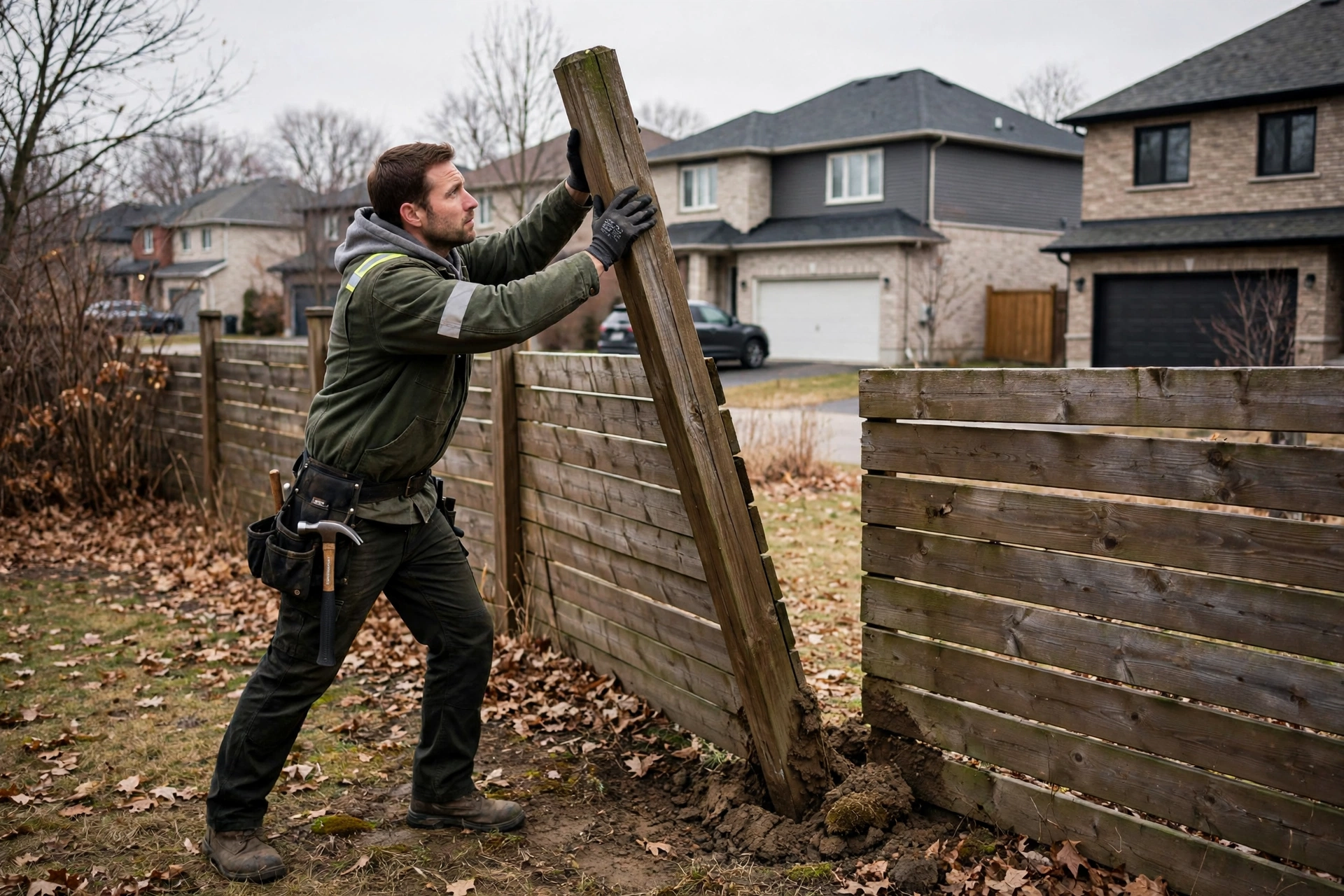
The push test. Grip the top of each post and push firmly. A sound post flexes slightly with the section and springs back. A post that moves at the base, feels spongy, or leans and stays leaned has failed below ground, even if the wood above the soil looks clean.
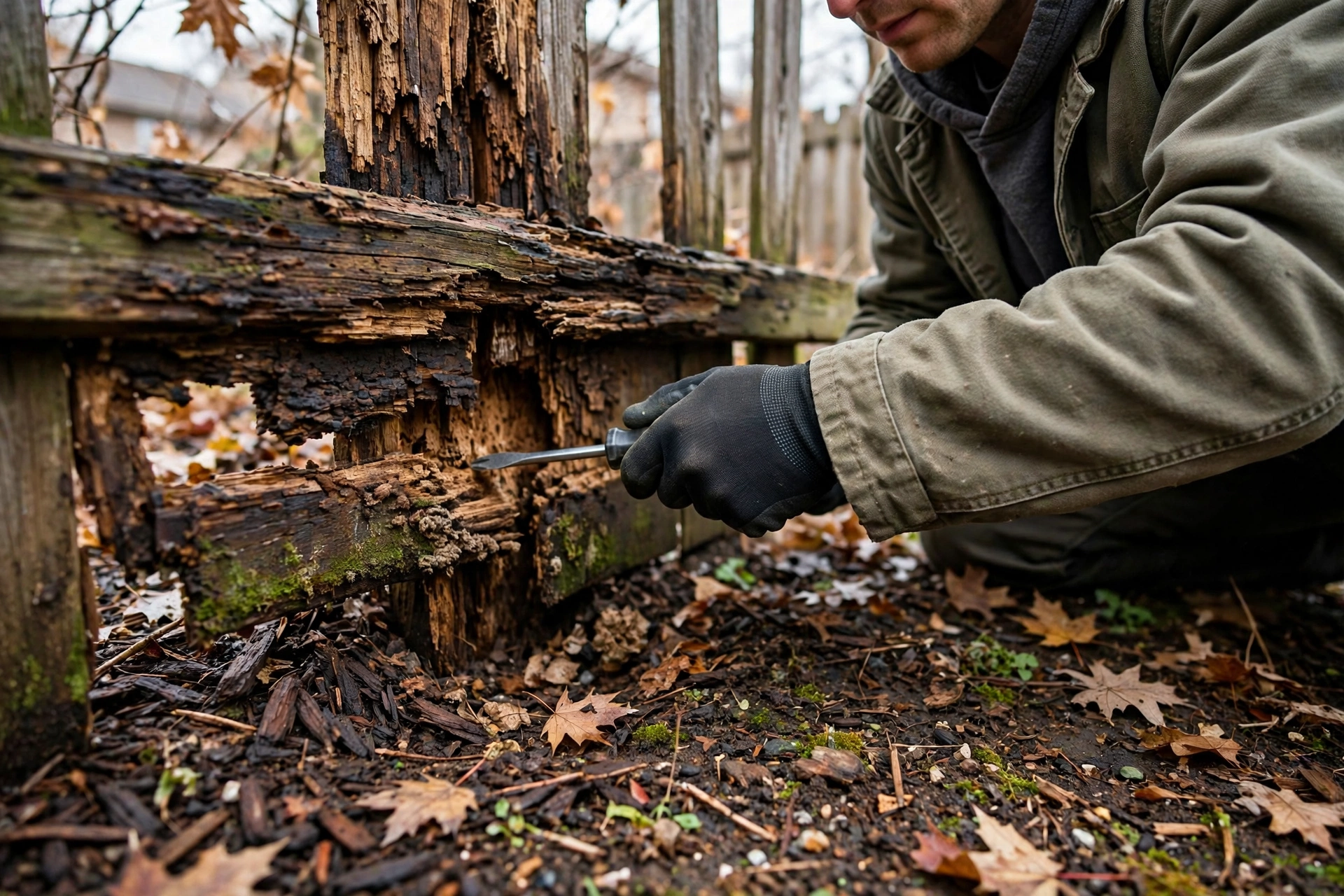
The ground-line check. Most Milton fence posts rot exactly where they meet the soil — that band stays damp, freezes, thaws, and rots first. Scrape a little soil back and probe the wood at ground level with a screwdriver. Sound wood resists. Rot lets the blade sink in with little pressure. Check the gate posts twice as carefully: they carry the gate’s weight and swing load, and they fail first.
Frost heave versus rot. A heaved post has been pushed up or tilted by frozen ground expanding — common in Milton’s clay, especially where downspouts or low spots keep the soil wet. The post itself may be sound, just displaced. A rotted post is soft and crumbling. Heave can often be reset and re-secured; rot cannot be un-rotted. Telling those two apart is the single biggest repair-versus-replace decision on the whole fence, and it is exactly what a proper fence repair assessment should do before anyone quotes a full rebuild.
Count the failures. As a working rule: if one or two posts in a run have failed and the rest pass the push and probe tests, repair the run. If every second or third post is soft at the base, the whole line is at the same stage of decay — replacing posts one at a time becomes a subscription, not a repair.
Step 2: Read the rails and boards honestly
Rails. Look along each section for rails that sag, twist, or have pulled their fasteners out of the post. A split rail at one joint is a local repair. Rails that are soft, blackened, or crumbling where boards attach are telling you the section has been wet for a long time.
Boards. Individual split, warped, or wind-loosened boards are the cheapest, easiest part of any fence to replace, and in newer Milton subdivisions in Derry Green, Clarke, and Beaty they are often the only real damage after a windy winter. Boards that are grey and weathered but solid are a cosmetic issue, not a structural one — cleaning and staining is a finish decision, not a rebuild.
The bottom edge. Boards that touch soil or sit in mulch wick moisture and rot from the bottom up. If the bottom few inches are soft across many boards but the tops are sound, the cause is usually grading or mulch piled against the fence — fix the cause when you fix the boards, or the new boards will follow the old ones.
What affects the cost at this level: how many boards and rails are actually unsound (not just weathered), whether matching board profiles are still available for your subdivision’s fence style, and whether soil or mulch has to be pulled back to stop the same rot returning.
Step 3: The gate tells the truth about the whole fence
A dragging or latching-poorly gate is often blamed on the gate itself, when the real cause is a gate post that has heaved, leaned, or rotted. Check the post first, then the hinges, then the gate frame. If the post is sound and the frame has racked — gone out of square — a gate can usually be rebuilt or re-braced. If the post has gone, no amount of hinge adjustment will hold alignment through another season of opening and closing.
In townhome rows in Willmott and Clarke, also check the side-yard gate and the fence returns to the house. Those short sections take wind load out of proportion to their size, and their posts are often the shallowest on the lot.
When repair is the right call — and when it is not
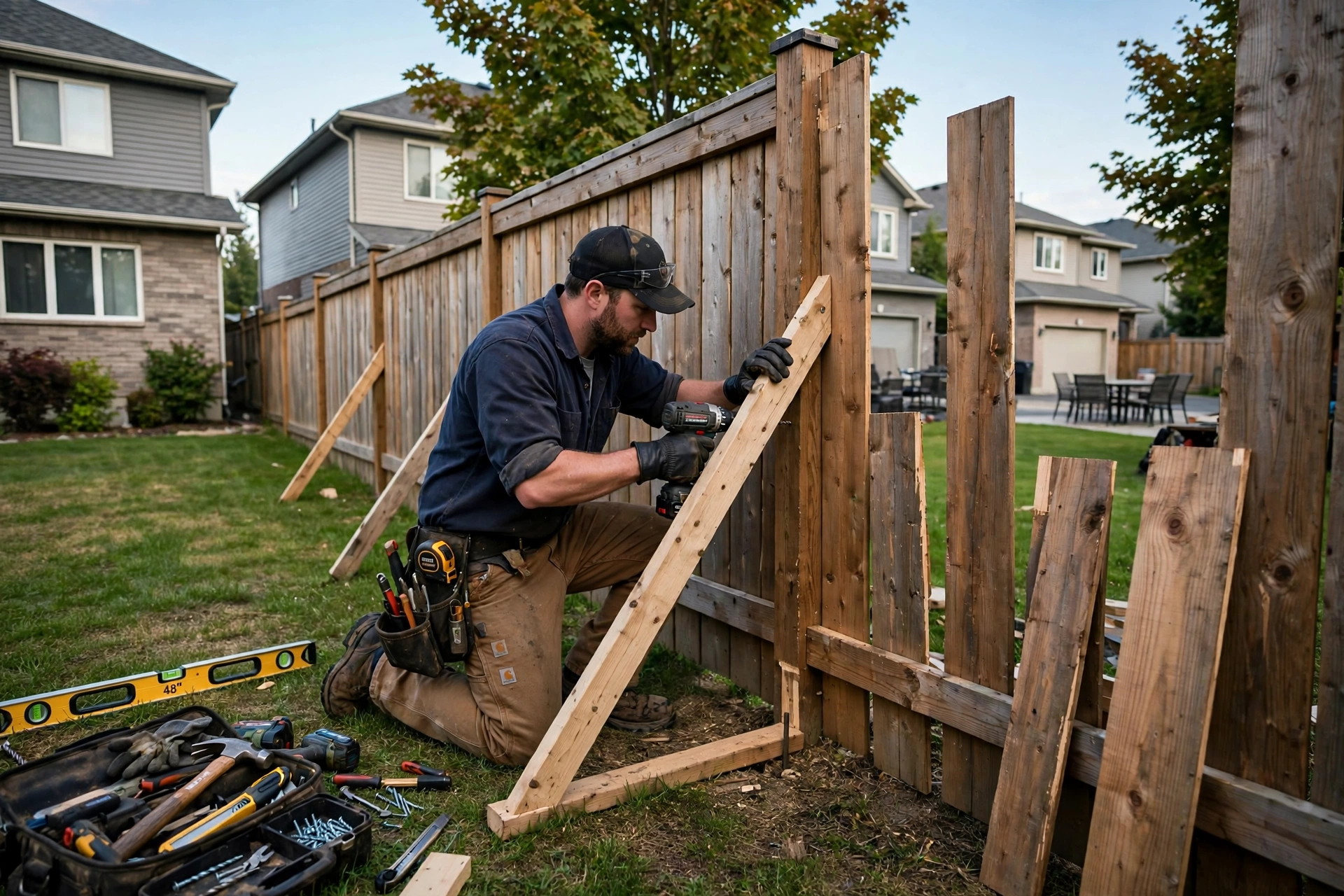
Repair when: the failed posts are isolated, the remaining posts pass the probe test, the rails are mostly sound, and the damage has a clear, fixable cause — one heaved post, one wet corner under a downspout, a handful of split boards. A targeted repair on a fundamentally sound fence in a 2010s Hawthorne Village or Ford backyard should give years more service.
Replace when: posts are soft at ground level along most of the run, sections lean in different directions, rails crumble where they meet posts, or a previous repair is itself failing. At that point each repair buys a season at best, and the money is better put toward a new line built with posts set properly for Milton soil. That is a fence installation conversation, not a patch — and it is also the moment to fix drainage and grading mistakes the original builder fence never accounted for.
The shared-fence reality. Most Milton subdivision fences sit on the property line and are shared with neighbours. Before a full replacement, talk to the neighbours on each run — cost-sharing is normal in Ontario subdivisions, and the Town of Milton has rules and a fence by-law framework worth checking for your lot before a dispute starts. Repairs to your side’s boards are simpler; a shared post line is a shared decision. Get the conversation done before materials are ordered, not after a crew is booked.
What affects the cost overall: the share of posts that have truly failed, access (tight side yards and finished landscaping slow everything down), whether concrete footings have to come out, and whether neighbours are sharing a full run or you are repairing a single section alone.
Do the check before the spring rush, and fix causes, not symptoms
The best time to walk the fence is late fall — now — and again right after thaw. A post identified while it is merely heaved can be reset; the same post ignored through another winter of water and freeze often comes out rotted. While you walk it, note where snow piles against the fence, where downspouts discharge, and where mulch has crept up the boards. Those three observations explain most Milton fence damage, and they are the same observations that keep trim, gates, and other exterior carpentry work from failing early elsewhere around the house.
Write down, section by section: post sound or soft, rail sound or split, boards sound or rotted, gate post true or leaned. That one-page list turns a vague “the fence looks rough” into a clear answer — repair these two sections, monitor that one, replace that run — and it is exactly the list to hand to whoever you ask for a quote.
Not sure whether your Milton fence is a repair or a replacement?
If you want a post-by-post second opinion before you commit to a rebuild, call Peter at 289-272-2868 or reach out through our contact page to book a visit.