
Getting a Milton Home Ready for Winter: Gutters, Door Seals, and Caulking That Matter Most
Why late October is the right time in Milton
Milton winters do not ease in. One week in late October you are still raking leaves in Hawthorne Village or Scott, and the next a cold snap off the Niagara Escarpment brings overnight frost, wind-driven snow, and daytime thaws that melt and refreeze in every small gap around your house. That freeze-thaw cycle is what turns minor fall neglect into winter damage — water in a clogged gutter freezes and pulls at the fascia, a cracked bead of caulking lets meltwater behind siding, and a worn door seal leaks heated air all day and night.
Most Milton homes were built quickly during the town’s long growth boom, from the 2000s subdivisions in Hawthorne Village, Willmott, and Derry Green to newer builds in Ford and the expanding edges near Campbellville. They are good houses, but builder-grade caulking, weather stripping, and gutter details were never meant to last forever without attention. Older homes in Old Milton, Beaty, and Clarke have a different list — original wood windows, settled frames, and gutters that have seen many winters. A focused half-day of checks in October, before temperatures stay below freezing, catches almost all of it while repairs are still simple and materials still cure properly.
This guide walks through the jobs that matter most, in the order to do them: gutters and drainage first, then door seals, then window caulking, and finally the small interior checks that prevent the most common winter call-outs.
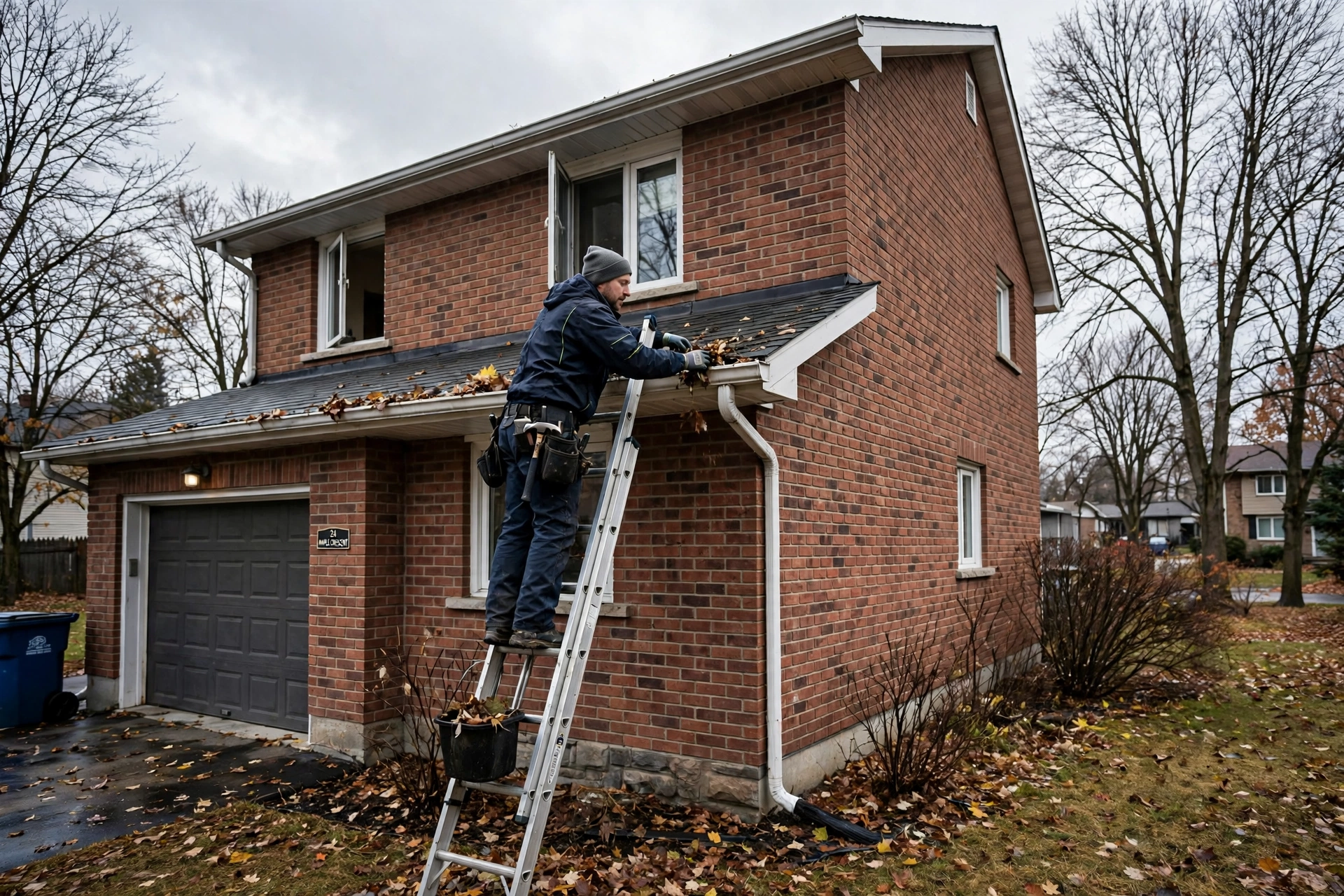
1. Gutters and downspouts: clear them, then check where the water goes
Milton’s subdivisions are planted with young maples and ornamentals that drop a surprising amount of leaf litter for their size, and in Old Milton the mature canopy drops far more. By late October, eavestroughs on most homes hold a mat of wet leaves, maple keys, and shingle grit. Left in place, that mat holds water against the roof edge. When it freezes, ice adds weight, opens seams, and can force meltwater back under shingles — the start of the icicle-heavy eaves and interior leaks homeowners notice in January.
Clean the troughs, flush each downspout until water runs freely, and confirm the elbows at the bottom are not crushed or buried. Then look at where the water lands. Downspout extensions should carry water well away from the foundation, not dump it beside a basement window well or onto a walkway where it will freeze into a sheet. In townhome rows in Willmott and Scott, shared drainage paths make this even more important — one blocked downspout can ice up a neighbour’s side path as well.
While you are up there, check for troughs that sag between hangers, seams that drip, and end caps that have separated. A gutter that holds standing water after a flush will hold ice all winter. If sections are bent, pulling away from the fascia, or repeatedly overflowing in the same corner, that is a repair or replacement conversation rather than another cleaning — see what professional gutter installation involves so you know what a proper fix looks like before you book anyone.
What affects the cost if you hire this out: the height and length of the roofline, how much debris and how many downspouts are involved, whether any sections need re-sloping or resealing, and whether extensions or splash blocks need to be added. No two Milton rooflines are the same, so any honest quote follows a look at the house itself.
2. Door seals: the cheapest heat you will save all winter
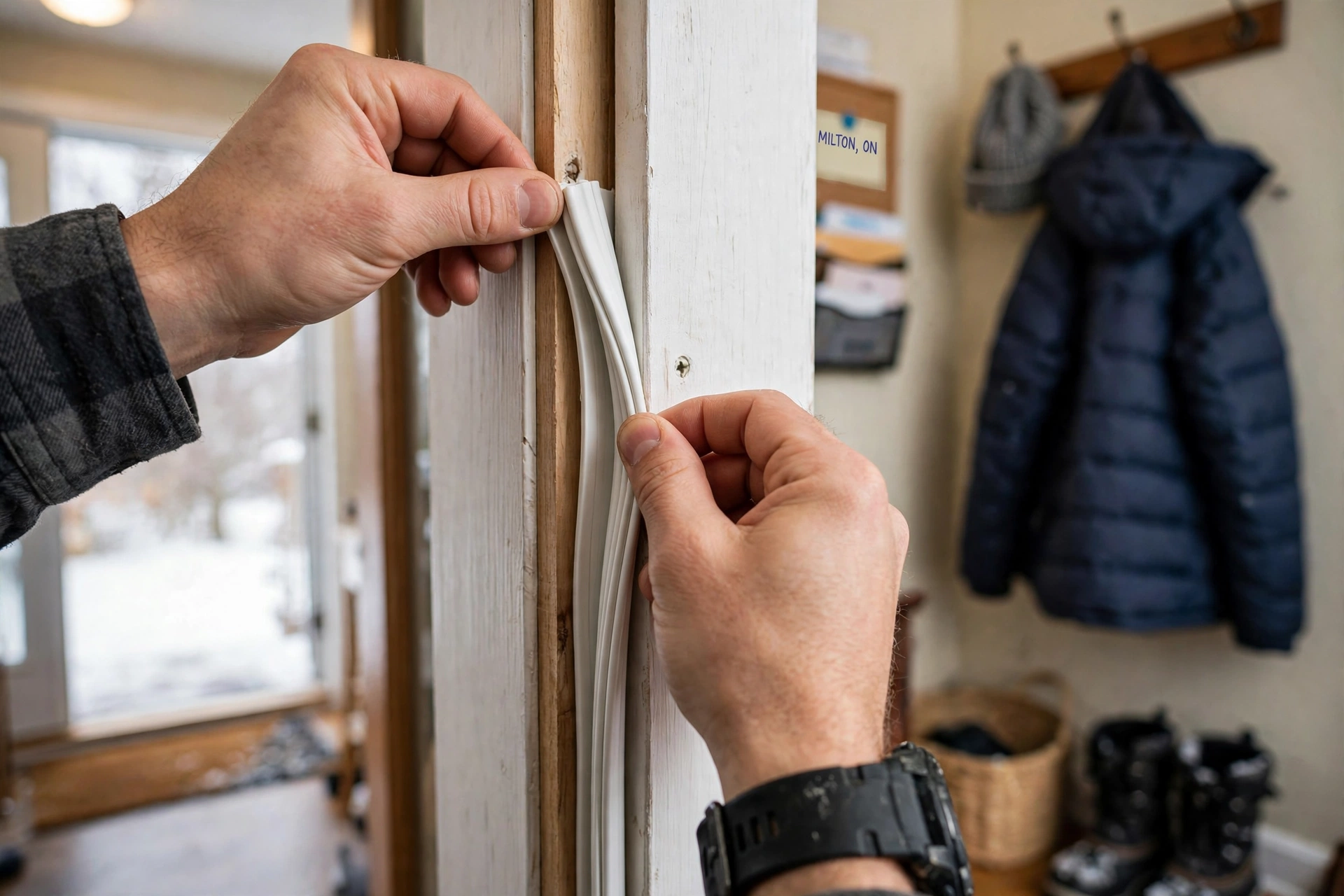
Close your front door on a bright day and look for daylight at the corners. Run your hand slowly around the frame on a windy evening — in Milton, the prevailing winter wind finds the west and north-facing doors in Ford and Derry Green first. If you feel air moving, the weather stripping is compressed, torn, or missing, and your furnace is heating the street in small, constant amounts.
Most 2000s and 2010s Milton builds use kerf-in foam or rubber stripping pressed into a slot in the frame. It works well for years, then flattens. Replacement is straightforward when the frame slot is intact: pull the old strip, press in the new one, and check that the door still latches without slamming. The door sweep at the bottom matters just as much. Garage entry doors and side doors in townhomes are the usual worst offenders — their sweeps drag, tear, and leave a visible gap at one corner where the slab or threshold has settled slightly.
Doors that stick in summer and gap in winter are common in newer Milton homes as framing dries and foundations settle through their first several seasons. A small gap that only appears in January is usually a seasonal movement issue and a new seal solves it. A door that has to be lifted to latch, or a frame visibly out of square, needs adjustment first — sealing a misaligned door just hides the problem for a season. If stripping, sweeps, and adjustment all need doing together, a dedicated weather stripping installation visit bundles them efficiently, and you feel the difference the first windy night afterward.
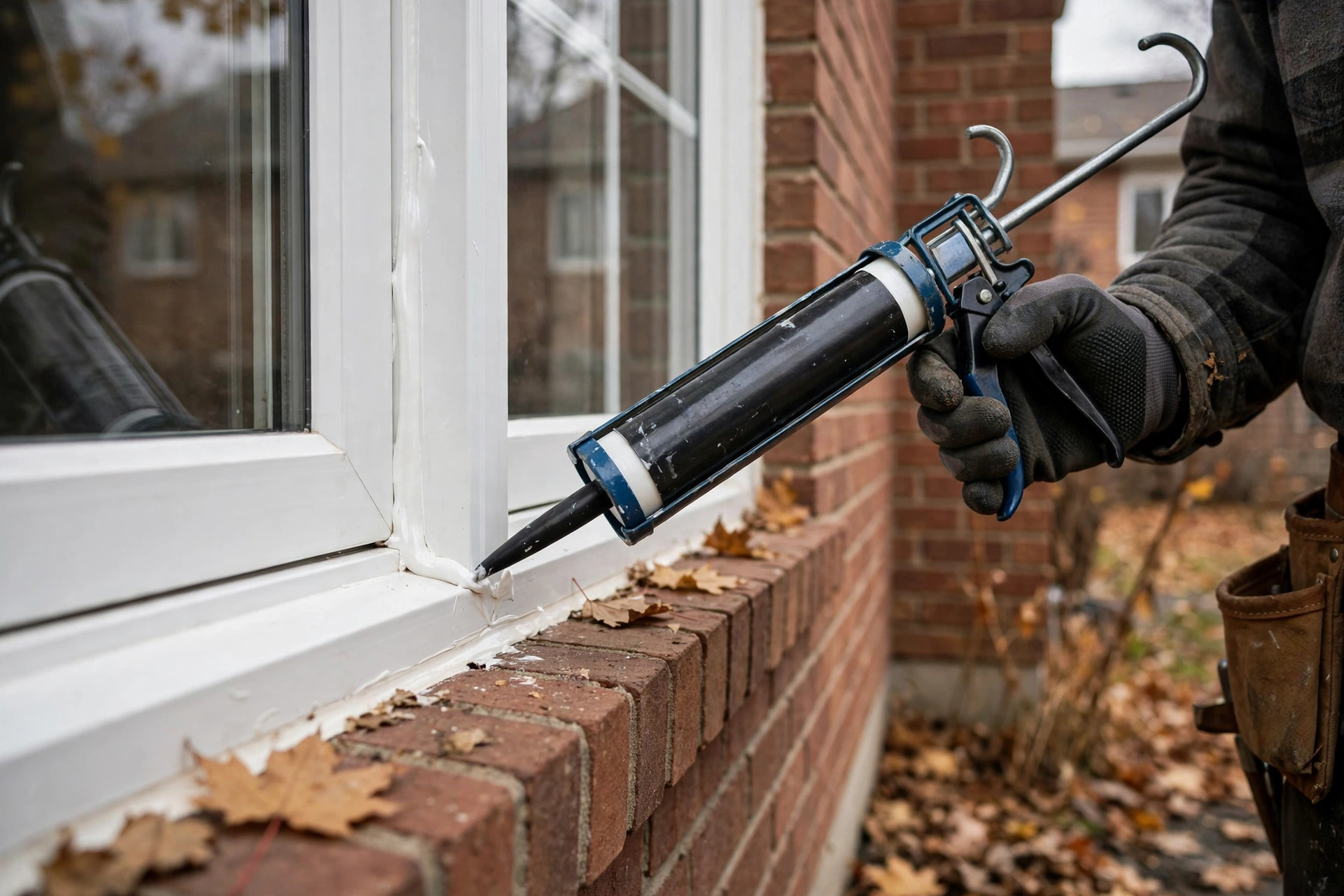
3. Window caulking: check the outside before it gets too cold
Exterior caulking has a working life, and on many Milton subdivisions homes the original builder bead is now well past it — cracked in long lines, pulling away from brick or siding in sheets, or missing entirely at the top of the frame where nobody looks. Every opening is a place for meltwater to enter during a January thaw and for cold air to whistle in during a February cold snap.
Walk the whole house on a dry day. Check around every window and door frame, where siding meets trim, around exterior vents, hose bibs, and any penetration for wiring or conduit. Pay special attention to south and west walls, which get the harshest sun-and-freeze cycling, and to the tops of frames, where a failed bead channels water directly into the wall assembly. In older Old Milton and Beaty homes with wood trim, look also for soft or flaking paint at the joints — that is often the first sign water has already been getting in.
Good caulking work is mostly preparation: old, failed material has to come out, the joint has to be clean and dry, and the new bead has to be tooled so it bonds to both sides. Rushing a new bead over a cracked old one in near-freezing weather is the most common reason the fix fails by spring. Most exterior sealants also need temperatures above freezing to cure properly, which is why late October — not the first December weekend — is the deadline. If several windows need stripping and resealing, professional caulking services handle the removal and finishing in one visit, including the bathroom and kitchen interior seals worth refreshing at the same time.
4. The small checks that prevent winter surprises
Hose bibs and exterior water. Disconnect garden hoses, drain exterior taps, and shut off interior valves to outside faucets if your home has them. A hose left connected in a Milton cold snap can split a pipe inside the wall, and the leak often is not discovered until spring.
Basement window wells. Clear leaves and debris from wells, especially on the below-grade windows common in Scott and Hawthorne Village walk-out and look-out basements. A well full of wet leaves holds meltwater against the window all winter.
Furnace filter and vents. Start the season with a clean filter, and walk the house to make sure supply and return vents are not blocked by new furniture or storage from a fall reorganization. Uneven heating complaints in two-storey Milton homes are often just a closed or covered vent in the coldest room.
Smoke and carbon monoxide alarms. With furnaces, fireplaces, and attached garages all working harder, fall is the natural time to test alarms and replace batteries. Ontario requires working smoke alarms on every storey and outside sleeping areas, and carbon monoxide alarms adjacent to sleeping areas in homes with fuel-burning appliances or an attached garage — which is most Milton homes.
Attic hatch and minor drafts. The attic hatch in many newer builds is uninsulated and unsealed, leaking warm, moist air into a cold attic where it condenses. A foam gasket and an insulated cover are small fixes with an outsized effect. While you are checking drafts, note any electrical outlets on exterior walls that feel noticeably cold — inexpensive foam gaskets behind the cover plates help.
A simple Milton winter-ready checklist
- Gutters cleaned, flushed, and checked for sags, drips, and separated seams
- Downspout extensions directing water away from the foundation and walkways
- Front, side, and garage-entry door stripping checked for daylight and drafts; sweeps replaced where torn
- Exterior caulking inspected around windows, doors, vents, and hose bibs; failed beads replaced before sustained freezing temperatures
- Hoses disconnected and exterior taps drained
- Basement window wells cleared
- Furnace filter replaced; vents confirmed open and unblocked
- Smoke and carbon monoxide alarms tested
Work through that list on one dry October weekend and most Milton homes are in good shape for whatever comes off the Escarpment this winter. The jobs are unglamorous, but they are exactly the ones that separate a quiet winter from an emergency repair in the coldest week of the year.

Need a hand getting your Milton home winter-ready?
If the gutter is pulling away, the door will not seal, or the caulking list is longer than a weekend allows, call Peter at 289-272-2868 or reach out through our contact page to book the work before the freeze sets in.