
How Much Does Drywall Repair Cost?
Drywall repair costs in the GTA can vary a lot, but the biggest factor is usually not the size of the hole — it’s the amount of labour, finishing, and detail work required to make the repair disappear. From my experience as a handyman serving homeowners across the GTA, many people are surprised to learn that the material itself is often the cheapest part of the job.
A small repair can still take time to do properly. You have to protect the area, repair the damage, let compounds dry, sand everything smooth, match the existing wall, and clean up afterward. That is why a drywall repair is really a finishing job, not just a matter of filling a hole.
What Affects Drywall Repair Cost
Several things affect the final price of a drywall repair:
- The size of the damage.
- The location of the damage.
- Whether the repair is on a wall or ceiling.
- Whether the drywall is cracked, dented, punched through, or water damaged.
- Whether texture matching is needed.
- Whether the area needs backing, patching, or full section replacement.
- How visible the repair will be once it is done.
Two repairs that look similar at first glance can end up requiring very different amounts of work. A small hole in a low-visibility basement wall is not the same as a ceiling repair in a bright living room with texture matching and paint blending.
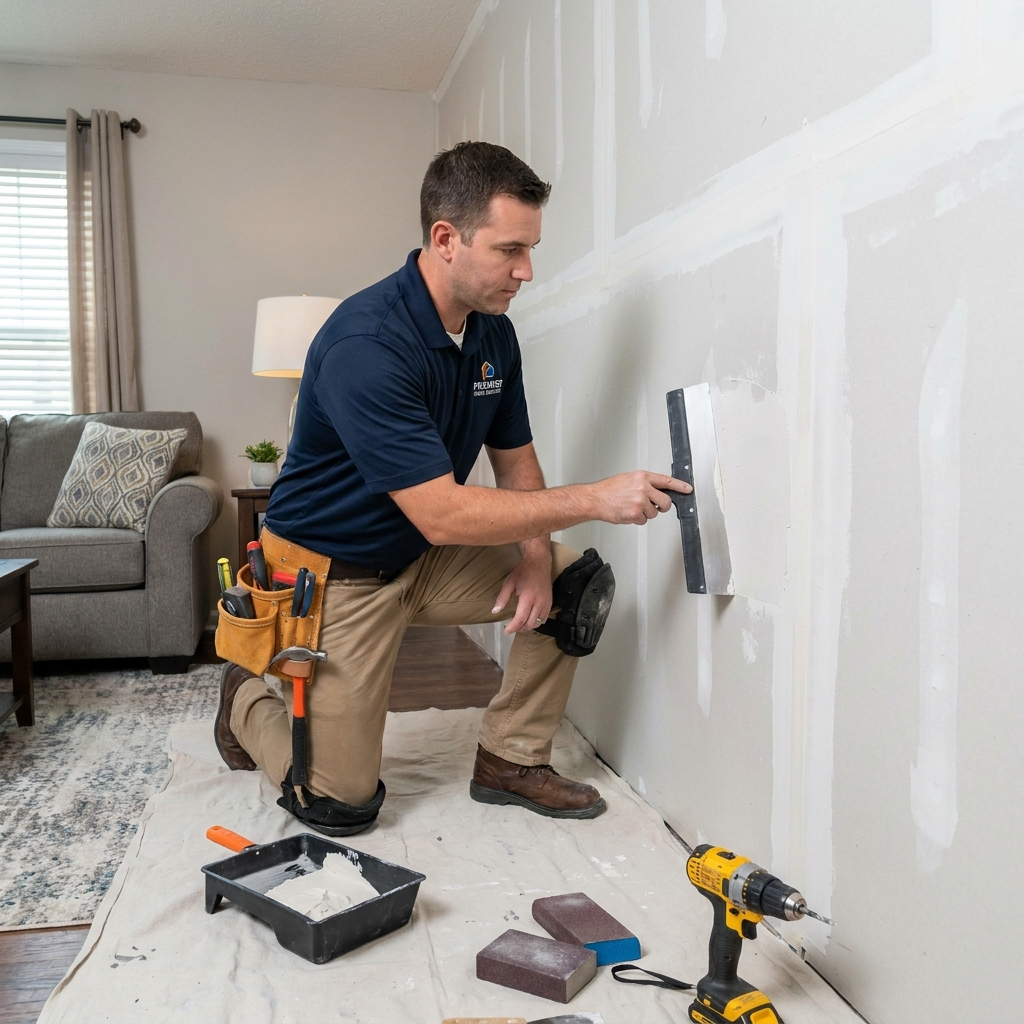
Typical Drywall Repair Prices in the GTA
Here are the general price ranges I usually see for common drywall repairs in the GTA:
Small holes and dents
Small drywall holes, anchor holes, nail holes, and minor dents usually fall around $100 to $250.
These are the jobs homeowners often think should be the cheapest, but even a simple repair still takes prep, filling, sanding, and cleanup. If there are several holes from a TV mount, shelf, mirror, or curtain rod, the price usually goes up because each area needs attention.
Doorknob holes and larger impact damage
Doorknob holes and similar impact damage usually run about $200 to $500.
These repairs often look simple from a distance, but the drywall around the hole is usually weakened or broken. That means the damaged area often needs to be cut back, backed properly, patched, taped, finished, and blended into the wall.
Cracks in drywall
Drywall crack repairs usually fall between $150 and $400.
Cracks can be straightforward, but the cause matters. A seasonal crack in a typical living area is one thing, while a recurring crack near a window, corner, or ceiling may point to movement, installation issues, or moisture concerns. A good repair should not just hide the crack, it should help prevent it from coming back.
Water-damaged drywall
Water-damaged drywall repairs often range from $300 to $1,000 or more.
This is where the price range gets wider because every situation is different. Sometimes the repair is just a damaged section in a basement. Other times it means removing drywall, checking for moisture issues, replacing insulation, installing new drywall, taping, finishing, and matching texture.
The most important thing with water damage is that the source of the moisture has to be fixed first. Otherwise, the problem will likely return.
Larger patches and renovation repairs
Larger drywall patches and repair work after plumbing, electrical, or renovation projects usually start around $400 and can go to $1,500 or more.
These jobs often involve more than just one patch. They may require section replacement, ceiling work, multiple coats of compound, texture matching, and more careful finishing. In some cases, a larger repair is actually easier than several small ones because the work is more straightforward.
Why Small Repairs Are Not Always Cheap
One of the biggest misunderstandings I hear from homeowners is that drywall repair should cost only a little because the material itself is inexpensive. A tub of drywall compound does not cost much, but that is not what the homeowner is really paying for.
They are paying for:
- Experience.
- Proper preparation.
- Dust control.
- Clean patching.
- Sanding and finishing.
- Time for drying between coats.
- Texture matching.
- Cleanup.
- A result that blends into the wall.
A repair can look small, but if the goal is to make it invisible after painting, the work behind the scenes adds up quickly.
What Homeowners Often Underestimate
A lot of people think drywall repair is just:
- Fill the hole.
- Sand it.
- Paint it.
In reality, a professional repair often involves much more than that. The difference between a patch that “covers” damage and one that disappears into the wall is in the finishing.
That is why a repair in a highly visible area can take far more effort than people expect. Lighting, texture, paint age, and wall condition all affect the final result.
Real Jobs That Changed How I Explain Pricing
The small hole that became a full wall repair
One homeowner removed a wall-mounted TV and expected a quick patch. Once the mount came off, the damage turned out to be larger than it looked at first. The drywall paper was torn, some areas were crushed, and the repair needed more prep and finishing than expected.
The homeowner assumed it would be a $50 to $100 job because the holes looked small. Once I assessed it properly, the work required multiple coats, sanding, and blending to get the wall ready for paint. The final result was smooth and clean, but it was a good reminder that visible damage is only part of the job.
A doorknob hole that needed rebuilding
I also repaired a large hole behind a bedroom door where the doorknob had gone through the drywall. The homeowner thought it would be a quick patch because there was only one damaged area.
The problem was that the drywall around the hole was no longer strong enough for a simple fill. The repair needed a proper cut-out, backing support, a patch, tape, compound, sanding, and texture matching. That job reinforced something I tell customers all the time: drywall repair is a finishing process, not just filling a hole.
A water-damaged basement wall
Another memorable job involved a basement wall with water damage. The homeowner originally wanted the damaged area patched and painted quickly. After inspection, it was clear that repairing the drywall without fixing the moisture issue first would only create the same problem again.
That job reminded me that sometimes the cheapest repair is not the best repair. If the source of the damage is not addressed, the wall will likely fail again later.
Matching texture in an older home
I’ve also worked on repairs in older homes where the biggest challenge was not the damage itself — it was the texture. The homeowner expected the repair to disappear right away after painting, but older wall textures are not always easy to match.
A repair can be structurally correct and still look obvious if the finish does not blend properly. In those cases, patience and experience matter just as much as the patch itself.
Multiple small repairs throughout a home
I often get calls for several small issues at once: picture holes, dents, old hardware marks, cracked corners, and minor damage in different rooms. Many homeowners assume several small repairs should be cheaper than one larger repair, but that is not always true.
Each repair still needs setup, prep, sanding, drying time, and cleanup. Sometimes multiple small repairs take longer than one larger area because each spot has to be handled individually.
DIY vs Hiring a Pro
I do think some drywall repairs are good DIY projects, especially for homeowners who are willing to learn and are not expecting a perfect invisible finish. Small nail holes, tiny dents, and basic touch-ups in low-visibility areas are usually reasonable to try yourself.
But there are some repairs I would strongly recommend leaving to a professional.
Repairs to avoid doing yourself
- Large holes or damaged sections.
- Ceiling repairs.
- Repairs that need texture matching.
- Water-damaged drywall.
- Repairs around corners, doors, and windows.
These jobs are more difficult than they look. A patch that is installed incorrectly can leave seams, bumps, cracks, or visible lines that show up after painting. Ceilings are especially hard because overhead work is tiring and imperfections are easier to see under lighting.
My advice is simple: if the repair is in a visible area, involves water damage, or needs to blend seamlessly, it is usually worth hiring someone experienced.
GTA-Specific Drywall Issues
The GTA has a wide mix of homes, and that creates a wide mix of drywall problems. In older homes in areas like Mississauga, Milton, Hamilton, and older parts of Brampton, I often see settling cracks, difficult texture matching, and older DIY repairs that need cleanup.
In newer subdivisions around Milton, Brampton, Vaughan, and similar areas, the most common issues are often from furniture moving, TV mounts, wall shelves, smart home installs, and small dents from everyday living. Even newer homes can develop nail pops, seasonal cracks, and minor drywall issues as the house settles.
The GTA climate also plays a role. Winter dryness can cause materials to shrink slightly, which often leads to cracks around doors, windows, ceilings, and transitions between different materials. Not every crack is a major issue, but recurring cracks should be checked before simply covering them up.
How I Quote Drywall Repairs
When I quote drywall work, I try to explain the process before I talk about the price. Once homeowners understand what is actually involved, the cost usually makes more sense.
I explain whether the job includes:
- Protecting the surrounding area.
- Removing damaged material.
- Installing a patch or backing.
- Applying compound in multiple coats.
- Sanding between coats.
- Matching texture if needed.
- Cleaning up the work area.
- Leaving the wall ready for paint.
That approach helps homeowners see drywall repair for what it really is: a trade based on finish quality, not just patching a hole.
What Homeowners Should Expect
If there is one thing I want homeowners to understand, it is this: drywall repair is about restoring the appearance of the wall, not just covering damage. A repair that looks acceptable from a distance is one thing, but a repair that disappears into the room takes skill.
The best drywall repairs are the ones nobody notices. That takes the right process, the right materials, and the patience to do the finishing properly. In my experience, homeowners are usually happy to pay for that once they understand what goes into it.
Drywall repair may seem simple on the surface, but good work comes from experience. When it is done properly, the damage should stop being the thing you see every time you walk into the room.