
What’s a Fair Price to Pay for Furniture Assembly?
If you’ve ever looked at a furniture assembly quote and thought, “Why does this cost so much?”, you’re not alone.
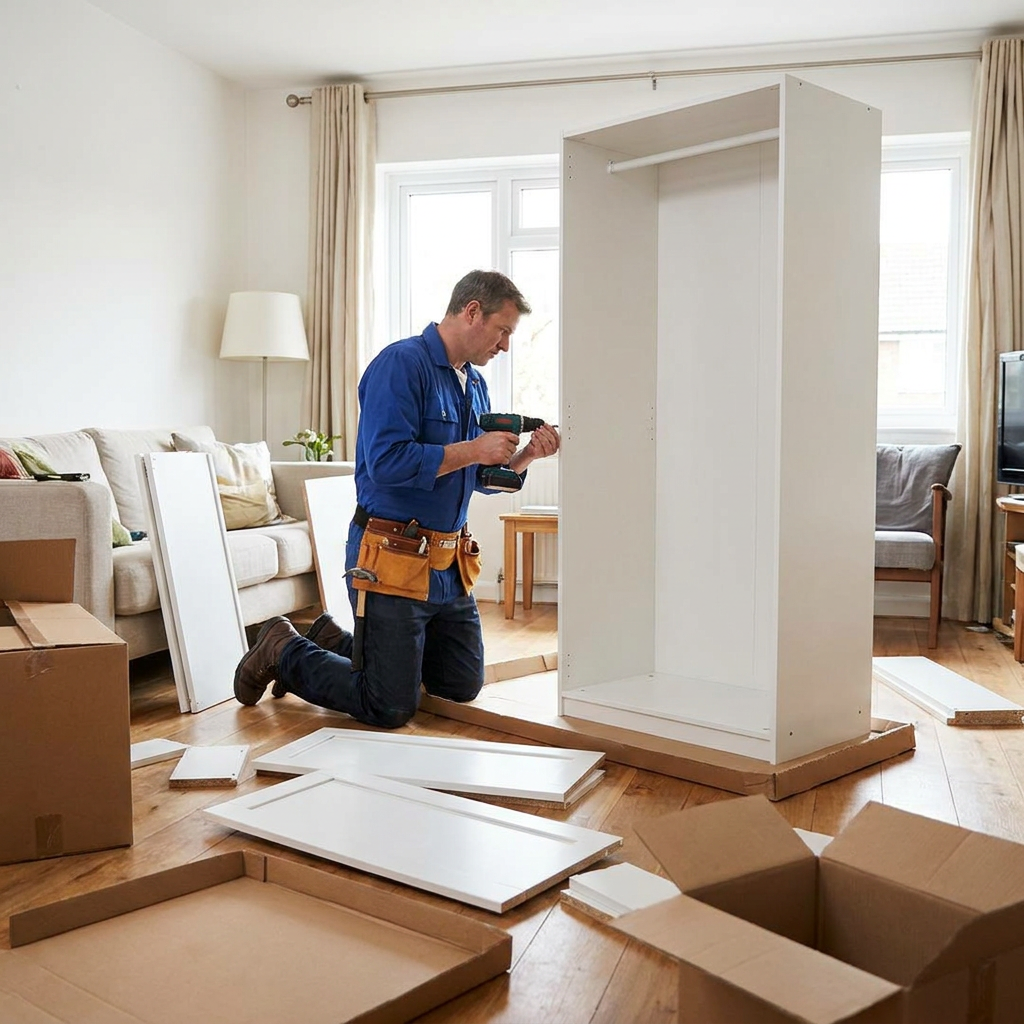
As someone who’s assembled everything from simple coffee tables to full IKEA PAX wardrobe systems across the GTA, I can tell you this: furniture assembly pricing has very little to do with the price of the furniture itself.
A $300 piece can take 6 hours to build. A $2,000 piece might take under an hour.
So what’s actually a fair price? Let’s break it down based on real experience.
Typical Furniture Assembly Costs
In most North American cities like Milton and the GTA, furniture assembly is priced either per item or based on estimated labour time.
Here’s what you can realistically expect:
- TV stands and media units: $100–$180
- Basic desks: $80–$150
- Standing or L-shaped desks: $150–$300
- Beds (IKEA MALM, HEMNES, etc.): $120–$220
- Dressers: $100–$250
- Sectional sofas: $100–$200
- IKEA PAX wardrobes: $300–$700+
- Murphy beds: $500–$1,000+
Most assemblers also have:
- A minimum service call (typically $80–$120)
- Hourly rates around $60–$100/hour
A realistic example of a half-day to full-day job:
- Queen bed: $175
- 6-drawer dresser: $175
- TV stand: $125
- Office desk: $150
Total: around $600–$650
Why Furniture Assembly Isn’t Cheap
One of the biggest misconceptions is that flat-pack furniture, especially IKEA, should be cheap to assemble.
In reality, some of the most affordable furniture is the most labor-intensive.
What actually drives the price:
- Number of parts and hardware
- Drawers, doors, and moving components
- Wall anchoring requirements
- Size and weight
- Instruction quality
- Assembly space (tight rooms slow everything down)
A large IKEA wardrobe, for example, can easily take 6–8 hours to assemble, level, align, and secure properly.
That’s why it’s completely normal for assembly to cost as much as, or more than, the furniture itself.
Real Example: The “Simple” Wardrobe That Cost $650
A customer once asked me to assemble “one IKEA wardrobe” and expected it to cost around $150–$200.
When I arrived, it turned out to be a full PAX system with:
- Three wardrobe frames
- Multiple drawers and shelves
- Mirrored doors
- Soft-close hardware
- Wall anchoring
- A tight bedroom workspace
Because of the limited space, everything had to be assembled upright, which added time and difficulty.
- Total time: nearly 7 hours
- Final price: $650
At first, the price surprised them. But once they saw the number of parts and how long it took, it made complete sense.
Lesson
One “piece” of furniture can be a full-day job depending on complexity.
Real Example: Multiple Items for $220
Another customer expected to pay $350–$450 for:
- A TV stand
- An office desk
- Four dining chairs
After reviewing the product links, I saw everything was simple and partially preassembled.
- Total time: just over 2 hours
- Final price: $220
Lesson
The number of items doesn’t determine the price. Complexity and time do.
The Biggest Pricing Misconceptions
These are the most common misunderstandings I see from customers:
“It’s just IKEA—it should be cheap”
Some IKEA furniture is among the most time-consuming to assemble.
Underestimating assembly time
Jobs that look like 1 hour often turn into 3–4 hours due to hardware, alignment, and adjustments.
Comparing to promotional or TaskRabbit rates
Low advertised rates usually apply to very basic items, not complex builds.
Pricing based on furniture cost
Assembly is based on labor, not retail price. A cheap item can take longer than an expensive one.
Ignoring wall anchoring and access
Things like securing furniture to the wall, stairs, parking, and tight spaces all add time and effort.
How I Price Furniture Assembly Jobs
My pricing philosophy is simple: I charge based on the work involved, not the category of furniture.
Hybrid Pricing Model
I use flat-rate pricing based on estimated labor time.
For example, if I know a dresser will take 2–3 hours, I’ll quote a fixed price instead of billing hourly.
Customers prefer knowing upfront that something costs $175 instead of “$75/hour and we’ll see.”
What I Evaluate Before Pricing
When I get a product link or request, I look at:
- Assembly time
- Complexity (drawers, doors, hardware)
- Size and weight
- Access (condos, stairs, parking)
- Risk (glass, expensive finishes, difficult brands)
Within a few minutes, I can usually place the job into a realistic price range.
When I Charge More
Some situations require higher pricing:
- Condos with parking, elevators, and long access times
- Large wardrobes and storage beds
- Murphy beds
- Wall-mounted furniture
- Tight assembly spaces
- Heavy or two-person items
A 2-hour job inside a unit can easily turn into a 4-hour commitment overall.
When I Charge Less
I’ll often lower pricing for:
- Repeat customers
- Multiple items in one visit
- Jobs close to my route
- Simple add-on items
For example, adding a nightstand during a larger job is much cheaper than booking a separate visit.
How to Make Sure You’re Paying a Fair Price
If you want to avoid overpaying or underpaying, here’s what actually works.
Send the Product Link
This is the most important step.
A link shows:
- Dimensions
- Number of boxes
- Instructions
- Hardware count
- Weight
- Whether anchoring is required
Photos alone aren’t enough for accurate quotes.
Ask What’s Included
Before hiring, clarify:
- Assembly only or full setup
- Wall anchoring
- Packaging removal
- Stairs or condo access
- Minimum service charges
Two quotes can look identical but include very different services.
Compare Scope, Not Just Price
Don’t compare $120 vs $220 without understanding:
- Experience level
- Reviews
- What’s included
- Estimated time
- Quality of work
A slightly higher quote is often better value.
Watch for Red Flags
Be cautious if someone:
- Quotes without asking for details
- Offers unusually low pricing
- Has no reviews or past work
- Is vague about what’s included
- Changes pricing significantly on-site without reason
Look for Green Flags
Good assemblers usually:
- Ask for product links
- Explain their pricing
- Mention wall anchoring when needed
- Have reviews or job photos
- Set realistic expectations
Don’t Automatically Choose the Cheapest Option
Low prices often lead to:
- Misaligned drawers
- Damaged panels
- Unstable furniture
- Paying someone else to fix it
Know When It’s Worth Paying More
It’s worth paying for experience on:
- IKEA PAX wardrobes
- Murphy beds
- Storage beds
- Wall-mounted units
- Heavy or glass furniture
Mistakes on these jobs can be costly.
The Bottom Line
A fair price for furniture assembly isn’t based on what the furniture costs, it’s based on the time, complexity, and responsibility involved.
The best way to get a fair deal:
- Send accurate product information
- Get 2–3 quotes
- Compare what’s included
- Choose someone who understands the job
In most cases, the fair price sits in the middle, not the cheapest, not the highest, but the one backed by experience, clear communication, and quality work.
That’s what ensures your furniture is built properly the first time by a professional handyman.