
How Much Does a Bathroom Remodel Actually Cost?
From a Milton handyman’s point of view, a bathroom remodel can cost anywhere from about $1,500 for a small refresh to $30,000 or more for a high-end renovation. Most homeowners, however, are usually deciding between a cosmetic update in the $1,500–$3,500 range, a partial renovation around $3,500–$7,500, or a more complete remodel costing approximately $7,500–$15,000 or more.
These are realistic planning ranges for Milton and the surrounding GTA, not fixed quotes. The final price depends on the bathroom’s condition, the materials selected, the amount of demolition, whether plumbing stays in place, and what is discovered after the old finishes are removed.
A current Ontario renovation guide places standard full bathroom renovations broadly in the mid-range five-figure category, while local Milton estimates also vary according to scope, materials, permits and layout changes.
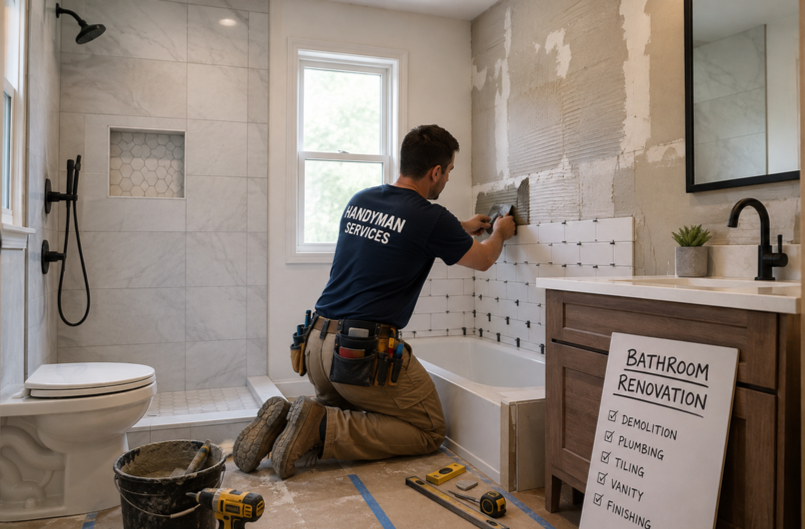
Bathroom Remodel Cost by Project Type
Basic Cosmetic Refresh: $1,500–$3,500
A basic refresh is suitable when the bathroom is fundamentally sound but looks dated or needs several small improvements. The existing layout and plumbing usually remain exactly where they are.
This type of project may include:
- Installing a new vanity and faucet.
- Replacing the mirror or medicine cabinet.
- Installing a new light fixture.
- Replacing the toilet.
- Painting the walls and trim.
- Completing minor drywall repairs.
- Replacing old caulking.
- Repairing small areas of tile.
- Replacing a limited amount of flooring.
- Updating hardware and bathroom accessories.
- Removing and disposing of old materials.
For a straightforward Milton bathroom, I would usually advise budgeting around $2,000–$3,000 rather than assuming everything can be completed for $1,000. Even a small project involves preparation, removal, installation, cleanup and finishing work.
A cosmetic refresh may be the right option when the tub, shower, flooring, plumbing and underlying surfaces are still in good condition.
Partial Bathroom Renovation: $3,500–$7,500
A partial renovation involves replacing several major components without completely rebuilding the bathroom.
For example, the homeowner may keep the existing tub but replace the vanity, toilet, flooring, lighting and fixtures. Another common project is updating the entire tub or shower surround while keeping the existing plumbing layout.
A partial renovation may include:
- Vanity and countertop installation.
- New faucet and toilet.
- New flooring.
- Shower or tub tile repairs.
- Regrouting and professional caulking.
- Drywall or subfloor repairs.
- Updated lighting.
- Fresh paint.
- Trim and finishing work.
- Demolition and disposal.
For this type of work, I would generally tell a Milton homeowner to have approximately $5,000–$6,000 available. If the old tile or flooring reveals moisture damage, the final cost can increase quickly.
Standard Full Bathroom Remodel: $7,500–$15,000 or More
A standard full remodel involves taking apart and rebuilding most of the bathroom while ideally keeping the toilet, vanity and shower in their existing locations.
The work may include:
- Demolition and disposal.
- Removing old flooring, tile, fixtures and finishes.
- Installing a new tub or shower.
- Shower waterproofing.
- Shower or tub tile installation.
- New floor tile.
- Vanity and countertop installation.
- New toilet and plumbing fixtures.
- Drywall or cement-board repairs.
- Surface and subfloor preparation.
- Painting.
- Lighting or electrical updates.
- Exhaust fan improvements.
- Trim, grout and silicone finishing.
For a reasonably sized Milton or GTA bathroom using good-quality, mid-range materials, I would normally recommend planning for approximately $10,000–$15,000.
Some projects may come in lower when the bathroom is in excellent condition, the layout stays the same and the homeowner chooses modestly priced materials. Other projects can exceed this range if there is water damage, outdated plumbing, poor previous workmanship or extensive demolition.
Broader Ontario estimates for full renovations can be higher when they include licensed trades, complete demolition, new waterproofing, premium finishes and project management.
High-End or Extensive Bathroom Renovation: $15,000–$30,000 or More
A high-end renovation is a major transformation rather than a simple replacement of existing fixtures.
It may include:
- A custom walk-in shower.
- Frameless glass doors.
- Premium porcelain or natural stone tile.
- A custom or double vanity.
- High-end plumbing fixtures.
- A freestanding bathtub.
- Heated flooring.
- Custom lighting.
- Electrical upgrades.
- Relocated plumbing.
- Structural changes.
- Custom storage or millwork.
- Extensive waterproofing and preparation.
For this type of project, $20,000–$30,000 or more is a realistic planning range in the GTA. A large ensuite, luxury shower system or renovation involving several specialized trades can exceed that amount.
The material budget alone can vary dramatically. A bathroom using $2,000 worth of tile and fixtures is financially very different from one using $8,000–$10,000 in premium products.
Real Bathroom Renovation Examples
Milton Main Bathroom Renovation
One project involved a standard 5 × 8-foot main bathroom in a Milton townhouse. The homeowner wanted to modernize the room without changing the existing layout.
The work included:
- Removing the old vanity and toilet.
- Repairing sections of drywall.
- Installing a new vanity and sink.
- Replacing the bathroom flooring.
- Installing a new mirror and light fixture.
- Repainting the room.
- Replacing old caulking around the tub.
The homeowner supplied most of the finish materials, including the vanity, flooring, mirror and fixtures. The project required approximately three to four days of actual work, spread around drying and installation time.
The handyman portion came in at roughly $1,500–$2,500, depending on the final materials and the amount of preparation required.
The biggest surprise was the condition behind the old vanity and around the tub. More moisture damage was present than could be seen initially, so sections of drywall had to be removed and replaced before the new finishes could be installed.
Oakville Shower and Bathroom Update
Another project involved a 6 × 9-foot bathroom in an older Oakville home. The bathroom was generally in reasonable condition, but the shower area was showing its age.
The work included:
- Removing deteriorated grout.
- Repairing problem areas.
- Recaulking the shower.
- Replacing damaged tile.
- Installing a new vanity and faucet.
- Repairing drywall.
- Repainting.
- Replacing the bathroom flooring.
- Updating smaller fixtures.
The homeowner purchased the vanity, tile, faucet and decorative materials. I supplied the installation materials and consumables.
The project cost approximately $2,500–$4,000 and took about four to six days, depending on drying time.
The unexpected issue was that several shower corners had been repeatedly caulked over the years. Once the old material was removed, it became clear that ongoing moisture had reached areas requiring additional repair. That is one reason I do not like giving a firm bathroom renovation price without seeing the room in person.
Brampton Bathroom Floor and Vanity Renovation
This Brampton bathroom was approximately 5 × 7 feet. The homeowner did not want a complete renovation but wanted the room to look substantially better.
The work included:
- Removing the old vanity and flooring.
- Repairing the subfloor where necessary.
- Installing new vinyl flooring.
- Installing a new vanity and faucet.
- Replacing the mirror and light fixture.
- Repairing drywall.
- Painting the walls and trim.
The homeowner supplied the vanity and flooring, while I handled the installation materials.
The project cost approximately $1,500–$2,500 and took around two to three days. It was relatively straightforward because the plumbing locations stayed where they were.
Hamilton Bathroom Renovation With Tile Work
A more involved project took place in a 6 × 8-foot Hamilton bathroom with a tub and shower combination.
The work included:
- Removing existing finishes.
- Preparing the walls.
- Installing new shower tile.
- Installing a new tub surround system.
- Replacing the floor tile.
- Installing a vanity, faucet and toilet.
- Repairing drywall.
- Painting.
- Completing trim, grout and caulking.
The homeowner selected and purchased most of the visible finish materials. I helped with installation and advised on materials and preparation products.
The project was in the general range of $4,000–$7,000 for the handyman and renovation work, depending heavily on the tile, fixtures and amount of demolition.
During demolition, parts of the existing wall assembly had been exposed to moisture. The original scope therefore had to be expanded to replace damaged material and properly prepare the area before the new shower finishes could be installed.
Mississauga Bathroom Refresh
I have also completed smaller bathroom refreshes in Mississauga. One involved replacing the vanity, faucet, toilet, light fixture and mirror, along with fresh paint, new caulking and minor drywall repairs.
That type of project can often be completed in one to two days and may fall somewhere around $1,000–$2,000 in labour and installation work, depending on the number of items being replaced.
Keeping the existing plumbing layout was one of the main reasons the work remained relatively efficient.
What Bathroom Costs Often Leave Out
Homeowners often focus on the visible products—tile, vanity, toilet and faucet—but those products are only part of the renovation cost.
Demolition and Disposal
Removing a bathroom is labour-intensive. Tile, drywall, flooring, vanities, toilets and old fixtures must be taken out carefully and transported for disposal.
Tile and old bathroom fixtures can create more waste than homeowners expect. Demolition and disposal should be clearly identified in the quote rather than assumed to be included.
Surface Preparation
New finishes cannot be installed properly over damaged or unsuitable surfaces.
The project may require:
- Drywall replacement.
- Cement board.
- Subfloor repair.
- Floor levelling.
- Wall preparation.
- Framing repairs.
- Removal of multiple old flooring layers.
- Preparation around plumbing openings.
Surface preparation may not be visible in the finished bathroom, but it has a major effect on how well the renovation performs.
Waterproofing
Waterproofing is one of the most important parts of a bathroom renovation. I would rather see a homeowner choose moderately priced tile over proper waterproofing than spend heavily on designer tile while cutting costs behind the finished surface.
A beautiful shower with poor waterproofing is a future problem waiting to happen.
Plumbing
Replacing a fixture in the same location is very different from moving a drain, toilet or water line.
Keeping the existing layout can avoid additional plumbing, demolition, flooring repair and finishing costs. Relocating plumbing can also introduce permit requirements and may require specialized licensed work, depending on the project and municipality. Milton guidance indicates that interior alterations involving plumbing or structural changes may require a permit, so homeowners should confirm requirements before work begins.
Electrical Work
New lights, exhaust fans, heated floors, outlets and other electrical changes may require an electrician and additional approvals.
Electrical work in Ontario must comply with the Ontario Electrical Safety Code and should be completed through the appropriate licensed electrical professional.
Finishing Work
Trim, transitions, silicone, grout, paint touch-ups and small adjustments are easy to overlook when calculating a budget.
These details are what make a finished bathroom look professional. A renovation is not complete when the vanity is installed; it is complete when the room is properly sealed, finished and ready for daily use.
Where Homeowners Should Spend More
My strongest advice is to spend money on the parts of the bathroom that are difficult to replace later.
I would prioritize:
- Proper shower waterproofing.
- Good substrate preparation.
- Quality plumbing fixtures.
- Reliable shower valves and cartridges.
- Properly installed flooring.
- A solid, well-built vanity.
- Effective exhaust ventilation.
- Quality grout and silicone.
- Correct preparation around tubs and showers.
These items may not create the most dramatic photograph, but they determine how the bathroom performs five or ten years later.
A moderately priced tile installed over a properly prepared and waterproofed shower is a better investment than expensive designer tile installed over a questionable surface.
Where Homeowners Can Save
There are also sensible ways to control the renovation budget.
Keep the Existing Layout
Keeping the toilet, vanity and shower in their existing locations is often one of the biggest money-saving decisions.
Moving plumbing can increase demolition, installation, flooring and finishing costs. If the layout works for the family, there may be no practical reason to change it.
Choose Practical Tile
Homeowners can find attractive ceramic and porcelain tile without buying the most expensive designer product in the showroom.
Tile selection should consider durability, maintenance, slip resistance and installation requirements—not only appearance or brand name.
Keep Sound Fixtures
A bathtub does not necessarily need to be replaced simply because the bathroom is being updated. If it is structurally sound, properly installed and suitable for the homeowner’s needs, keeping it may allow more budget for waterproofing, storage, lighting or ventilation.
Supply Your Own Finish Materials
Homeowners can sometimes save money by purchasing their own vanity, faucet, mirror, light, flooring or tile.
However, the materials should be discussed before ordering. Quantities, dimensions, compatibility and delivery timing all matter. The quote should also state who is responsible if a product is missing, defective or damaged.
Problems I Would Never Hide
A bathroom deals with water every day, so it is one of the worst rooms in the house for covering up problems.
I would not recommend:
- Painting over serious moisture damage.
- Installing new tile over a damaged substrate.
- Applying new caulking over old failing caulking.
- Ignoring a soft floor around a toilet or tub.
- Using inappropriate materials inside a shower.
- Covering a leak instead of repairing its source.
- Choosing fixtures solely because they are the cheapest.
- Skipping proper waterproofing.
Trying to save a few hundred dollars on preparation can eventually cost thousands if water damage continues behind the new finishes.
Milton and GTA Cost Differences
The municipality does not determine the renovation price by itself. Scope, materials, property type, access and bathroom condition are usually more important.
Milton
Many Milton homes are newer, including townhouses and newer detached homes. When the bathroom has not been altered significantly, the layout can be relatively predictable.
Common issues still include poor previous caulking, deteriorated grout, weak ventilation, moisture around tubs and showers, damaged flooring near toilets and builder-grade fixtures.
A newer home is not automatically problem-free. Poor workmanship or inadequate ventilation can create moisture problems even in a relatively recent bathroom.
Oakville
Oakville contains a mixture of older homes, established neighbourhoods, townhouses and newer construction.
Older bathrooms may contain multiple layers of caulking, deteriorated grout, uneven floors, older plumbing and previous renovations that covered earlier problems. Oakville homeowners may also choose higher-end tile, custom vanities and upgraded shower systems, which can substantially increase the material budget.
Mississauga
Mississauga includes detached homes, townhouses and many high-rise condominiums.
Condo renovations can involve:
- Building management approval.
- Restricted renovation hours.
- Elevator booking.
- Parking limitations.
- Protection of common areas.
- Plumbing and electrical rules.
- Special disposal procedures.
A bathroom that appears to be a three-day job inside a condo can take longer because materials, tools and demolition waste must be moved through elevators and shared spaces.
Brampton
Many Brampton projects involve townhouses and detached family homes where homeowners want to modernize the bathroom without moving the layout.
Practical improvements often include better storage, improved lighting, easier-to-clean tile, a larger vanity and a more functional shower. Keeping plumbing in place can make these renovations relatively efficient.
Hamilton
Older Hamilton homes can contain several generations of previous repairs.
Once the flooring or walls are opened, you may find:
- Older plumbing.
- Damaged subfloors.
- Multiple flooring layers.
- Water damage.
- Outdated electrical work.
- Uneven walls and floors.
- Previous DIY modifications.
- Poor ventilation.
A bathroom that initially appears inexpensive can require additional repair once demolition begins.
Toronto
Toronto includes very old houses, compact bathrooms, townhouses and modern condominiums.
Older houses may have narrow staircases, limited working space and difficult material access. Condos can involve strict building rules, elevator scheduling and disposal requirements.
A 5 × 7 bathroom is small, but that does not automatically make it inexpensive. Working in a confined space can require more careful removal, protection and installation.
Handyman or Specialized Contractor?
For a straightforward bathroom refresh, a skilled handyman can often complete a significant portion of the work, including:
- Vanity installation.
- Fixture replacement.
- Drywall repair.
- Painting.
- Trim work.
- Caulking.
- Flooring.
- Mirror and accessory installation.
Larger renovations involving extensive plumbing, electrical work, structural changes or a completely new shower system should involve the appropriate licensed trades.
I would not recommend hiring a handyman simply because the price is lower if the project actually requires specialized plumbing, electrical or structural work. The right approach is to match the contractor to the scope of the job.
How to Compare Bathroom Quotes
The lowest quote is not automatically the best value. Homeowners should compare the scope of work, materials, preparation and exclusions.
Before accepting a quote, ask:
- Is demolition included?
- Is disposal included?
- Are materials included or supplied by the homeowner?
- Who orders and receives the materials?
- Is waterproofing included?
- What waterproofing system will be used?
- Is surface and subfloor preparation included?
- Are plumbing and electrical work included?
- Are permits required?
- Who handles permits and inspections?
- Are painting, trim, grout and caulking included?
- What happens if hidden damage is discovered?
- How are additional repairs priced?
- What is specifically excluded?
- What is the expected timeline?
- Who is responsible for defective or damaged materials?
One question I particularly recommend is:
“Can you walk me through everything that could cause this quote to increase?”
A contractor with bathroom renovation experience should be able to explain likely risk areas, not just provide an attractive bottom-line number.
Budget for Unexpected Repairs
For an older or uncertain bathroom, I recommend keeping approximately 10–20% of the renovation budget available as a contingency.
You may discover:
- Water-damaged drywall.
- A soft subfloor.
- Damaged framing.
- Old plumbing that needs attention.
- Uneven surfaces.
- Incorrect previous repairs.
- Additional demolition requirements.
- Poor ventilation or moisture-related damage.
You may not spend the contingency, and ideally you will not. However, having it available means you are less likely to compromise the quality of an important repair when an unexpected problem is uncovered.
A Practical Pre-Renovation Checklist
Before starting a bathroom renovation in Milton or the surrounding GTA, consider the following:
- What actually needs fixing?
- Is there evidence of water damage around the tub, shower, toilet or vanity?
- Does the floor feel solid?
- Is the existing shower properly waterproofed?
- Is the ventilation adequate?
- Can the current plumbing layout stay?
- What is the realistic total budget?
- Are demolition and disposal included?
- What materials will the homeowner supply?
- Are the materials compatible and available on time?
- Who is responsible for permits and licensed trades?
- What is included in the quote?
- What is excluded?
- How will unexpected problems be handled?
- Is the material being selected for durability or appearance alone?
- Is 10–20% available for unexpected repairs?
Final Advice From a Milton Handyman
Do not think of a bathroom renovation as buying a collection of new products. You are paying for the complete system: demolition, preparation, waterproofing, plumbing, installation, ventilation, finishing and the small details that make the room last.
If the budget is limited, I would rather see a homeowner renovate fewer things properly than attempt a complete luxury renovation using shortcuts.
A bathroom does not always need to be completely gutted to look and function like new. If the plumbing, waterproofing and underlying structure are sound, a carefully planned update with a new vanity, flooring, fixtures, caulking, tile repairs and paint can provide an excellent result for considerably less money.
But if there is water damage, a failing waterproofing system, a soft floor, outdated plumbing or a major layout problem, those issues should be addressed before spending money on cosmetic finishes.
For homeowners in Milton, Oakville, Mississauga, Brampton, Hamilton, Toronto and the surrounding GTA, my most important advice is simple: plan for the bathroom you want, but budget for the bathroom you may uncover once the old one comes apart.