
How to Stop Winter Drafts in Milton: Weather Stripping, Door Sweeps, or Caulking — How to Tell Which One You Need
The furnace is fine — the edges of the house are not
By mid-November in Milton, most draft complaints sound the same. The furnace runs, the thermostat reads what it should, and one room still feels cool. The front hall in a two-storey home in Hawthorne Village is cold long after the door closes. A bedroom over the garage in Scott never quite warms up. In an older home in Old Milton or Beaty, the living room is comfortable in the afternoon and chilly the moment a north wind picks up off the Niagara Escarpment in the evening.
In most of those houses the heating system is not the problem. Cold air is getting in around the edges — around doors and windows. And the fix is rarely one single product. A draft at the side of a door, a draft under a door, and a draft around a window frame are three different failures, each needing a different repair. Putting a sweep on a door that needs stripping, or caulking a window whose sash seal has failed, wastes a weekend and leaves the draft where it was. This guide is about telling them apart: simple checks on a windy evening, then the repair that actually matches what you find.

First, find the draft properly — four checks that take ten minutes
Do these checks on a breezy evening after the furnace has run, so the house is warm and leaks are easy to feel. Work door by door and window by window, and note what you find where — there are five to eight openings worth checking in a typical Milton home.
The hand test. Move the back of your hand slowly around the frame of a closed door or window without touching it. Note whether air comes from the side or top of the frame, from under the door, or from around the window sash itself. Location is the whole diagnosis — keep it specific.
The daylight test. A sliver of daylight at a door corner or along the latch side means the seal is not compressing there at all. Daylight under the door points to the sweep or threshold. No daylight but still a draft usually means stripping that is present but flattened — common on builder foam in 2000s and 2010s homes in Willmott, Ford, and Derry Green.
The paper test. Close the door on a sheet of paper held at different points around the frame. If the paper pulls out with almost no resistance, the seal is not making contact at that spot. If it grips firmly in some places and slides freely in others, the door or frame is slightly out of alignment — a pattern you often see in newer Milton homes in their first few winters as framing dries and settles.
The window check. At each window, feel first around the outside frame where it meets the wall, then around the moving sash where it meets its own frame. Air at the outer frame is a caulking and sealing question. Air at the sash is a latch, lock, or sash-seal question — and exterior caulking will not fix it, no matter how neat the bead is.
Drafts at the sides and top of a door: weather stripping
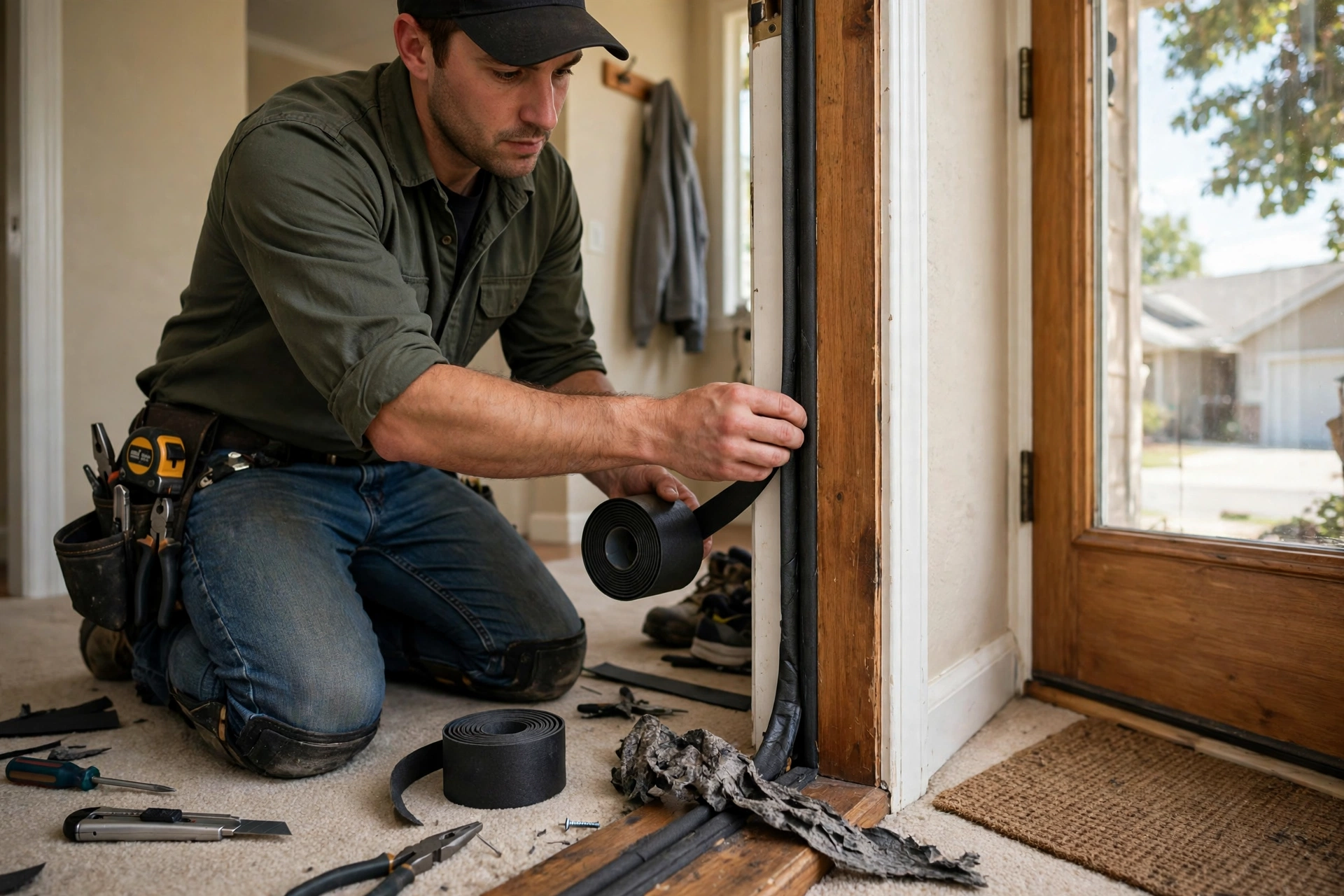
If the hand and paper tests show air leaking along the sides or across the top of a door, the weather stripping is the culprit. Most Milton subdivision homes use kerf-in stripping — foam or rubber with a fin that presses into a narrow slot cut in the frame. It seals well while it is soft and springy. After years of summer heat, winter cold, and thousands of closings, it flattens, hardens, and sometimes splits at the corners where it flexes most.
Replacing it means pulling the old strip out of its slot, cleaning the slot, and pressing in new material of the right profile so the door still latches without being slammed. Too thin and it will not seal; too thick and the door fights you, which wears the latch and hinges. Corners need care — a gap at a top corner undoes much of the work along the rest of the frame. Garage entry and side doors deserve the same attention; in many Milton townhomes in Scott and Clarke the garage entry door is the draftiest in the house, because it is opened far more often than the front door.
When stripping, sweeps, and latches all need attention on several doors at once, booking dedicated weather stripping installation bundles the work into one visit, with the right profiles on hand for each frame instead of a second trip to the store for the one door that turns out to be different.
What affects the cost of having stripping done for you: how many doors are involved, whether the frames take standard kerf-in material or need adhesive or screw-on types, and whether any door needs adjustment first so the new seal can actually compress evenly.
Drafts under the door: the sweep and the threshold
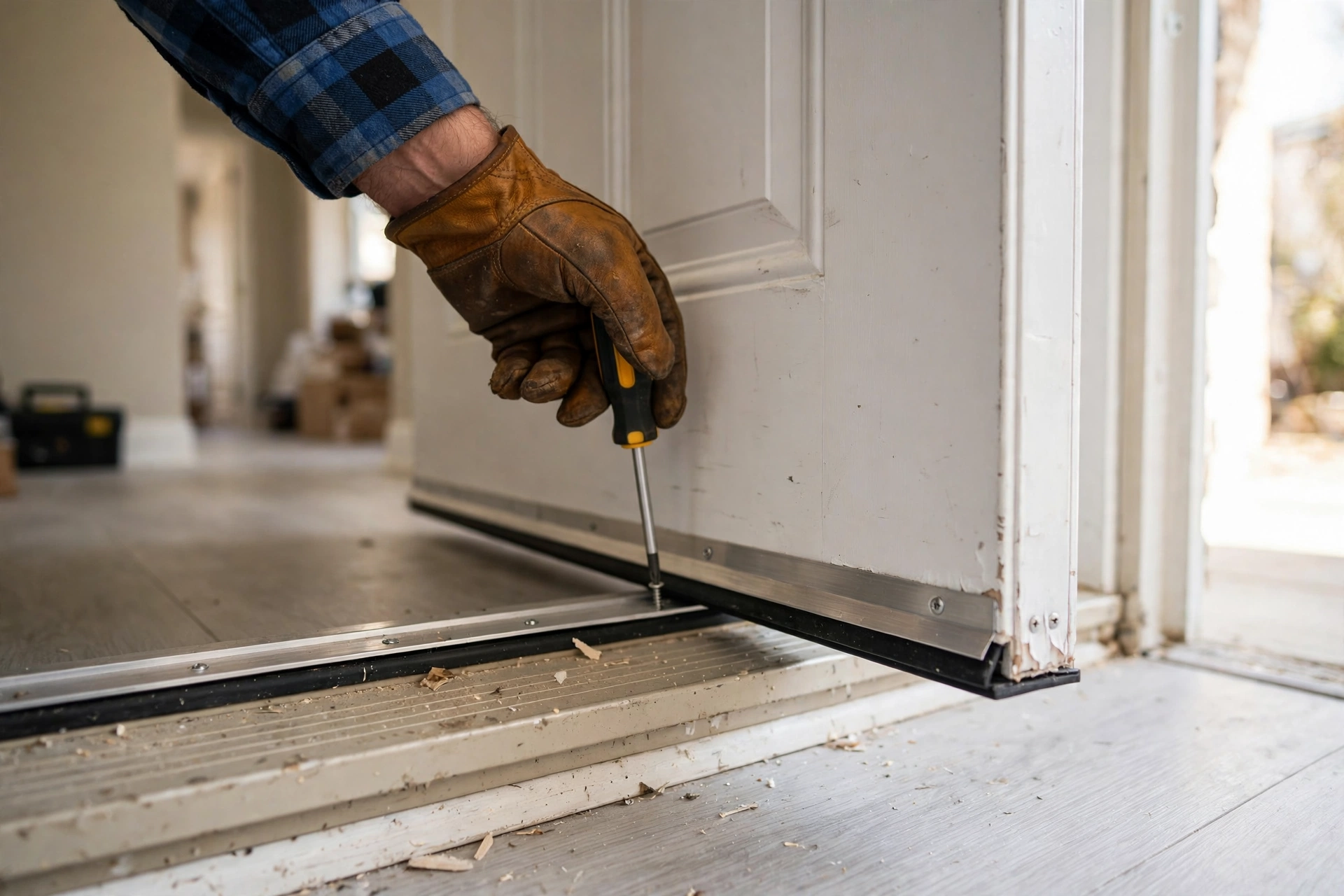
A cold line along the floor in front of a closed door, dust marks on the flooring at the threshold, or daylight visible underneath all point to the bottom of the door. The seal there is the door sweep — a strip with a flexible fin or brush that closes the gap between the bottom of the slab and the threshold. Sweeps wear faster than any other seal in the house because they drag. They tear, stiffen, and lose their flex, and in newer Milton homes a small amount of settling can open one corner of the gap wider than the other, so the sweep seals at one end and leaks at the other.
The fix is a sweep matched to the door bottom and threshold height, then a check from inside on a bright day to confirm the light line is gone along the full width. If the gap itself is uneven — taller at one corner — the threshold or door needs a small correction first. A thicker sweep forced into an uneven gap just drags and wears out in a season. Do not forget the door to an attached garage: beyond drafts, that door separates the home from garage fumes, and in the many Milton homes with a bedroom above the garage, cold air below is felt directly above.
When neither stripping nor a sweep will fix it: the door itself
Sometimes the seals are new and the draft is still there, because the door no longer sits square in its frame. The clues are in the earlier tests: paper that grips at the top and slides at the bottom, a latch that only catches if you lift the handle, hinge screws that will not tighten, or a gap that changes noticeably between humid summer weather and dry January air beyond the normal seasonal swing.
In Milton’s fast-built subdivisions this is familiar: as framing lumber dries through the first several winters, frames shift a fraction — enough that a seal needing even compression stops working on one side. The honest order is alignment first, seals second: repair loose hinge fixings, adjust the strike so the latch pulls the door in evenly, and only then judge the stripping. Door adjustments and frame corrections sit within carpentry services, often combined with trim and sticking-door fixes so the whole door closes, latches, and seals in one visit.
Drafts around windows: caulking, latches, and sash seals
Windows fail in three places, and the window check tells you which one you have. Air around the outer frame, where the unit meets brick, siding, or interior trim, is a sealant failure. Outside, the original builder bead on many Milton homes is now cracked or pulling away — worst on south and west walls. Replacing it properly means removing the old material, cleaning the joint, and tooling a new bead that bonds to both sides; a fresh bead over a cracked old one rarely lasts a winter.
Air through the sash — where the moving part closes — is different. Start by locking the window fully; many drafts shrink when the lock pulls the sash tight, and a lock that no longer draws the sash in is itself the repair. If a locked window still leaks at the sash, the sash seal has worn — a seal replacement, not a caulking job. In older Old Milton and Clarke homes with wood windows, also check for soft paint at the sash corners, a sign water has been getting in as well as air.
Condensation between panes is neither of these: it is a failed glass unit, and no caulking fixes it. For frame and joint resealing inside and out, professional caulking services cover the removal and finishing work that decides whether the repair lasts.
What affects the cost of window resealing: how many windows and storeys are involved, how much failed material has to come out first, and whether the work is exterior, interior, or both sides of the same frame.

The leaks most Milton homes miss
The attic hatch. In many newer builds the hatch has no gasket and no insulation, so warm air leaks up around it all winter. A foam gasket and an insulated cover fix it for about the effort of a door seal.
Exterior-wall outlets and the basement rim. Outlets on outside walls in Ford and Willmott homes can feel noticeably cold; foam gaskets behind the cover plates help. In unfinished basements, the rim joist above the foundation wall is another quiet leak path — worth a hand check on a windy day.
Patio sliders. Sliders in townhomes and semis collect grit and wear their pile stripping thin. Clean the track, check the panel sits square and the latch pulls it tight, then judge the seals: alignment before sealing.
A quick way to decide
- Air at the sides or top of a door, no daylight: weather stripping has flattened — replace it.
- Daylight at a door corner, paper slides out in one spot only: check alignment and hinges before replacing seals.
- Cold air and daylight under the door: door sweep or threshold — replace the sweep, then re-check the full width.
- Air around a window’s outer frame: failed caulking — remove the old bead and reseal.
- Air through a window sash even when locked: sash seal or lock — caulking the frame will not fix it.
- Fog between window panes: failed glass unit — not a sealing job at all.
Ten minutes with a sheet of paper on the next windy evening will sort most Milton drafts into the right column on that list. Fixing the right thing once beats sealing the wrong thing twice — and the first still night afterward, when the front hall stays warm, tells you the diagnosis was right.
Still feeling a draft you cannot pin down?
If a door will not seal after new stripping, a sweep still shows daylight at one corner, or a window leaks somewhere the checks do not explain, call Peter at 289-272-2868 or reach out through our contact page to book a visit.