
Is It Cheaper to DIY Tile or Hire a Professional?
A lot of homeowners ask this question before starting a tile project: is it cheaper to do it yourself, or should you hire a professional? From my experience as a handyman in Milton, the honest answer is that it depends on the size of the job, the type of tile, and how much damage a mistake could cause.
For small, low-risk projects like a simple kitchen backsplash, DIY can absolutely save money. But when the job involves a bathroom floor, shower walls, waterproofing, large-format tile, or natural stone, hiring a pro is often the better long-term value. Tile is not just about making a room look good on day one. It also has to hold up for years without loose tiles, cracked grout, or hidden water damage.
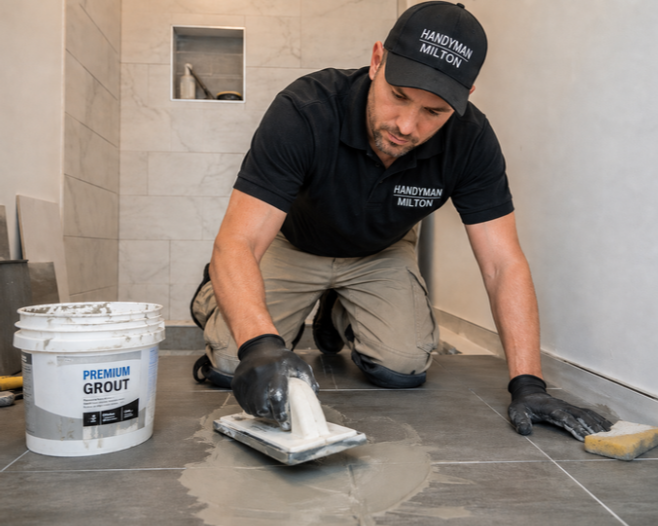
What Homeowners Usually Get Wrong About DIY Tile
One of the biggest mistakes I see is that people focus on the tile itself and underestimate everything that happens before the first tile goes on the wall or floor. In reality, prep work is where a tile job succeeds or fails.
Homeowners often run into problems like:
- Tiling over an uneven or damaged surface.
- Skipping waterproofing in showers.
- Not checking that the first row is level.
- Using too much or too little mortar.
- Not planning the layout, which leaves tiny slivers of tile at the edges.
A tile job can look fine at first and still fail later if the prep work was done poorly. That’s especially true in bathrooms, where water exposure turns small mistakes into expensive repairs.
My Experience With a Failed Shower Project
One job that stands out happened here in Milton. A homeowner decided to install his own shower wall tile after watching several online tutorials. He did a decent job with the tile cuts, but he skipped installing a proper waterproof membrane behind the cement board because he thought the tile and grout would keep the water out.
About eight months later, he started noticing grout cracking near the bottom of the shower and a musty smell in the adjoining room. When I removed several tiles, we found moisture had been getting behind the wall the entire time. The damage was limited to part of the drywall and framing, but the entire shower still had to be torn out and rebuilt.
What started as a way to save a few hundred dollars ended up costing several thousand dollars to repair.
That’s why I always tell homeowners this: tile is decorative, but waterproofing is what protects your home.
When DIY Tile Makes Sense
DIY tile can be a good option when the project is small, simple, and mostly cosmetic. If you’re patient, willing to learn, and okay with spending extra time, a basic project can be rewarding.
DIY usually makes the most sense for:
- A small kitchen backsplash.
- A low-risk decorative wall.
- A project where minor imperfections won’t matter much.
- A homeowner who already has some tools and experience.
If you’re using basic ceramic tile and the layout is straightforward, DIY can save money and give you a sense of accomplishment. In some cases, even if the lines aren’t absolutely perfect, the final result still looks great.
When You Should Hire a Professional
Where I recommend hiring a professional is on jobs where mistakes are expensive to fix or where waterproofing matters.
That includes:
- Bathroom floors.
- Shower walls and shower pans.
- Large-format tile.
- Natural stone.
- Heated floors.
- Entryways or other high-traffic areas.
- Any project where water can reach the substrate.
These jobs require more than just sticking tile to a surface. The substrate has to be properly prepared, the layout has to be planned carefully, and the waterproofing has to be done correctly. Once tile is installed, fixing problems usually means removing everything and starting over.
The Hidden Costs of DIY Tile
A lot of homeowners think DIY tile is automatically cheaper, but they often forget to add up the real costs. By the time you buy the tools and materials, the savings may be smaller than expected.
Some of the biggest hidden expenses include:
- Tile saw rental or purchase.
- Specialty tools like a notched trowel, spacers, leveling clips, grout float, sponges, and mixing paddle.
- Diamond hole saws and angle grinder blades for tricky cuts.
- Mortar, grout, waterproofing products, backer board, sealant, and transition strips.
- Extra tile for waste, breakage, and mistakes.
- Your time, which is often the biggest cost of all.
A wet saw alone can add a lot to the project budget. Then there are the smaller items people forget to price in, which can quietly push the total higher than they expected. I’ve also seen homeowners buy extra tile, break a few pieces, and end up spending more in the process of learning than they would have spent hiring someone from the beginning.
Why Time Matters More Than People Think
One of the biggest differences between DIY and professional tile work is speed. A bathroom floor that might take me a day or two can easily turn into several weekends for someone doing it for the first time.
That doesn’t mean DIY is wrong. It just means the real cost is not only measured in dollars. It also includes the time spent learning, making cuts, correcting mistakes, and cleaning up after the fact.
For homeowners, that time cost matters even more if the project disrupts a bathroom, kitchen, or entryway that you need every day.
A Simple Rule I Give Milton Homeowners
If you’re trying to decide whether to DIY or hire a pro, I tell people to ask a better question:
Can I fix it if something goes wrong?
That question gets to the heart of the issue. Laying tile is only one part of the job. The real challenge is making sure the surface is flat, the layout is balanced, the waterproofing is correct, and the finished installation lasts for years.
Here’s the simple rule I recommend:
- DIY is a good option for a small kitchen backsplash or another decorative project where a mistake is mostly cosmetic.
- Hire a professional for showers, bathroom floors, entryways, heated floors, or any project involving waterproofing, large-format tile, or expensive materials.
Those are the jobs with the least room for error. If something goes wrong, the fix usually means tearing things out and doing the whole job again.
Get a Quote Before You Buy Materials
One practical tip I always give homeowners in Milton is to get a professional quote before buying materials. Even if you still plan to do the project yourself, a quote gives you a more realistic picture of the total cost, timeline, and scope of work.
A lot of people are surprised to find out that professional labour is often less expensive than repairing water damage or replacing a failed tile installation. That’s especially true in bathrooms, where one mistake behind the tile can lead to a much bigger problem later.
Final Thoughts
So, is it cheaper to DIY tile or hire a professional? Sometimes yes, sometimes no. For a small backsplash, DIY can be a smart and affordable choice. For bathrooms, showers, and other high-risk areas, hiring a professional is often the cheaper option in the long run.
My advice is simple: don’t just think about the price of the tile job today. Think about whether the installation will still look good and perform properly 10 or 15 years from now. A well-installed tile job is an investment in your home, and doing it right the first time is almost always the most cost-effective choice.