
Is Professional Gutter Installation Worth the Cost?
For many Milton homeowners, professional gutter installation is worth the cost when the project involves a two-storey home, a complicated roofline, serious drainage problems, or a gutter system that has reached the end of its useful life.
However, replacement is not always the right answer. If your gutters are generally in good condition and the problem is limited to one loose bracket, leaking joint, or damaged section, a targeted repair may be more practical and affordable.
From my experience as a Milton handyman, the most important question is not simply, “How much does gutter installation cost?” It is:
What problem is the new gutter system supposed to solve?
When Professional Gutter Installation Is Worth It
A professional installation can be a worthwhile investment when the job requires more than attaching a few short gutter sections to the edge of a simple roof.
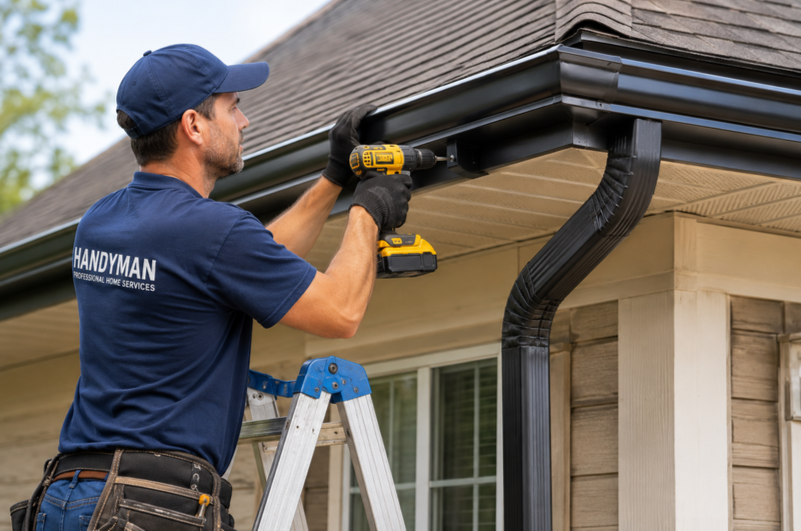
Two-Storey or Difficult-to-Reach Homes
Working from a ladder is one of the biggest safety concerns with gutter projects. A one-storey bungalow with an accessible roofline is very different from a two-storey detached home or a house with high, difficult-to-reach eaves.
Professional installation may be the better choice when:
- The gutters are located several metres above the ground.
- Long gutter sections must be lifted and positioned.
- The roofline is difficult to access safely.
- The property requires specialized equipment.
- You do not have experience working at height.
- The ground around the home is uneven or obstructed.
Confidence alone is not enough to make a gutter project safe. The right equipment, access, and experience matter. Saving money on installation is not worthwhile if it leads to a fall, damaged siding, bent gutters, or an improperly installed drainage system.
Complicated Rooflines
Simple rooflines are generally easier to plan and install. Homes with multiple roof sections, valleys, dormers, inside corners, and outside corners require more careful attention.
The gutters must be installed with the correct slope so water moves toward the downspouts instead of sitting in the channel. Downspouts must also be positioned where they can handle the amount of water coming from the roof areas above them.
A gutter system can look attractive after installation and still perform poorly if the pitch, corners, or downspout locations were not planned correctly.
Ongoing Overflowing
Many homeowners assume overflowing gutters automatically mean they need larger or newer gutters. Sometimes that is true, but overflowing can have several causes.
The problem could be related to:
- Incorrect gutter slope.
- Blocked gutters or downspouts.
- Too few downspouts.
- Undersized downspouts.
- Poorly positioned downspouts.
- A complicated roofline directing too much water to one area.
- Heavy rainfall exceeding the capacity of the existing system.
- Water entering the gutter too quickly from a roof valley.
Replacing the gutters without identifying the cause may not solve the problem. A professional assessment should consider the roof area, gutter capacity, downspout placement, extensions, and the location where water is discharged.
Water Near the Foundation
Gutters are not only intended to protect siding and trim. They also play an important role in managing water around the foundation.
If a downspout releases water directly beside the house, the result may be pooling, soggy soil, erosion, or water movement toward the foundation. Replacing the gutter itself will not necessarily fix the issue.
The installation may need:
- Longer downspout extensions.
- Better downspout routing.
- Additional downspouts.
- Corrected gutter slope.
- Improved discharge locations.
- Coordination with the property’s existing grading.
The goal is to move water away from the home in a controlled way rather than simply allowing it to fall beside the foundation.
When a Repair May Be Enough
I am not automatically in favour of complete gutter replacement. If most of the system is sound, replacing everything may create an unnecessary expense.
A repair may be appropriate when the problem involves:
- One loose or damaged gutter section.
- A leaking joint or end cap.
- A small number of failed hangers.
- One damaged downspout.
- A loose connection.
- A short section damaged by impact.
- Minor separation that has not caused widespread deterioration.
For example, a gutter system with one loose bracket and a single leaking seam may not need to be replaced. Repairing the affected area, resealing the joint, and securing the gutter properly may restore its performance.
The important question is whether the repair addresses an isolated problem or only temporarily hides a larger issue.
Signs Replacement Makes More Sense
Replacement is usually worth considering when the system has repeated or widespread problems.
Warning signs include:
- Gutters that sag along multiple sections.
- Frequent leaking at several seams.
- Gutters pulling away from the fascia.
- Rust, cracks, holes, or significant corrosion.
- Repeated patching in the same areas.
- Persistent overflowing after cleaning.
- Downspouts that are undersized or poorly positioned.
- Water consistently pooling near the foundation.
- Fascia or attachment points that are deteriorated.
- A system that is simply worn out.
On some older Milton homes, I have seen gutters that were patched so many times that another repair was no longer the sensible long-term option. At that point, replacement can provide better value than continuing to pay for small repairs that do not solve the underlying problem.
DIY Gutter Installation: When It May Be Reasonable
A small DIY gutter project can be reasonable if the work is straightforward and low-risk.
DIY may make sense when:
- The work is on an accessible one-storey section.
- Only a short section needs replacement.
- The roofline is simple.
- The homeowner has the correct tools.
- The existing fascia is structurally sound.
- The homeowner understands how to establish proper slope.
- Long gutter sections can be handled safely.
- The downspout location does not need to be redesigned.
Even in a simple project, the gutter should not be installed level. It needs a suitable pitch toward the downspout, while still appearing visually straight from the ground.
A homeowner also needs to make sure the gutter is securely fastened, the joints are sealed correctly, and the downspout discharges water far enough away from the foundation.
When DIY Is a Poor Choice
DIY becomes less attractive when the project involves height, complex drainage, or structural concerns.
I would be cautious about DIY installation on:
- Two-storey homes.
- Homes with steep or complicated rooflines.
- Properties with several valleys or dormers.
- Areas where water is already pooling near the foundation.
- Homes with deteriorated fascia.
- Long uninterrupted gutter runs.
- Properties exposed to heavy snow or ice.
- Installations requiring multiple new downspouts.
- Projects where safe ladder access is difficult.
A gutter system that is installed incorrectly may not fail immediately. It may sag after a few seasons, leak during freeze-thaw cycles, or continue sending water toward the foundation. The initial saving can disappear quickly if the work has to be corrected later.
Milton and Southern Ontario Weather Factors
Southern Ontario weather places considerable stress on gutter systems. Milton homeowners need to account for more than ordinary rainfall when deciding whether to repair or replace their gutters.
Heavy Summer Rain
A gutter system that handles light or moderate rainfall may still overflow during a sudden summer downpour.
When assessing a system, I look at the roof area, gutter size, slope, downspout capacity, and the number and position of downspouts. A large roof section may be sending more water into a gutter run than the existing system can handle.
The right solution may involve improving the slope or downspout layout rather than simply installing gutters that look newer.
Freeze-Thaw Cycles
Water can enter small gaps and joints, freeze, expand, and make existing damage worse. Repeated freeze-thaw cycles can contribute to leaking seams, separated joints, and weakened fasteners.
This is why secure fastening, proper pitch, sound joints, and good installation practices matter. A gutter system that is only sealed cosmetically may not hold up well through several Southern Ontario winters.
Snow and Ice
Snow sliding off a roof and ice accumulating along the eaves can place additional stress on gutters. The risk depends on the roof design, roof slope, exposure, and how the gutters are positioned.
A replacement system should not always duplicate the exact layout of the old one. If the original gutters were poorly supported or positioned in a way that left them vulnerable to snow and ice, the installation should address those weaknesses.
Leaves and Mature Trees
Established Milton neighbourhoods may have mature trees that add beauty and shade but also create maintenance problems. Leaves, twigs, and other debris can quickly block gutters and downspouts.
Gutter guards may be worth discussing in some situations, but I do not recommend them automatically. Their performance depends on the type of guard, the surrounding trees, roof conditions, and the homeowner’s willingness to maintain the system.
Even with gutter guards, the roof and gutter system should still be inspected periodically.
Older Homes
Older homes may have uneven rooflines, deteriorated fascia, outdated gutters, or evidence of repeated repairs. Before installing new gutters, it is important to determine whether the structure supporting them is sound.
A new gutter system cannot be properly secured to rotten or weakened fascia without addressing that condition first. Fascia repairs or other carpentry may need to be included in the project.
Two Representative Milton Project Examples
The following examples reflect the types of gutter problems I have encountered locally. They are representative project examples rather than exact customer case studies.
Two-Storey Detached Home With Overflowing Gutters
One homeowner was dealing with gutters that overflowed during heavy rain. Water was also collecting near one corner of the foundation, and several gutter sections were beginning to sag.
After inspecting the roofline, I found that the system had inadequate slope and that the downspout placement was not moving water away from the house effectively.
Rather than simply installing new gutters in the same locations, I recommended:
- Replacing the worst sections.
- Correcting the gutter pitch.
- Improving the downspout routing.
- Adding proper extensions.
- Directing water farther away from the foundation.
After the work, the homeowner noticed much better water flow during rain. More importantly, water was no longer pooling beside the foundation in the same way.
The lesson from this type of project is that overflowing water is not always a gutter-material problem. It may be a slope, capacity, or drainage-layout problem.
Older Milton Home With Repeated Repairs
Another homeowner had an older gutter system with leaking joints, loose fasteners, and several areas that had been patched over the years. At first, the homeowner thought a few more repairs would be enough.
After examining the system, the larger issue became clear: several sections were deteriorated and the gutter system was approaching the end of its useful life.
I recommended replacing the deteriorated sections instead of continuing to patch them. The new work included proper slope and secure fastening.
The result was a cleaner-looking system with fewer leaks and more reliable drainage. In this situation, replacement made more sense because repeated repairs were no longer providing dependable long-term value.
How to Compare Gutter Installation Quotes
Homeowners should not judge a gutter quote by the total price alone. A fair price depends on the amount of gutter being installed, the height and difficulty of the home, the material, the number of downspouts, and whether drainage problems must be corrected.
When comparing quotes, ask each contractor to clearly identify:
- The linear footage of gutters being installed or replaced.
- The material and size of the gutters and downspouts.
- The number of downspouts included.
- The length and type of downspout extensions.
- Removal and disposal of the old gutters.
- The fasteners, hangers, and support method.
- Any fascia repairs or other carpentry.
- How existing overflow or drainage problems will be addressed.
- Whether gutter guards are included or recommended.
- The workmanship warranty and what it covers.
- Any exclusions or potential additional charges.
The quotes should describe comparable work. One contractor may quote a basic replacement while another includes additional downspouts, stronger fastening, fascia repairs, disposal, and drainage improvements.
Be Careful With Extremely Low Quotes
A quote that is dramatically cheaper than the others deserves careful examination. The lower price may reflect:
- Fewer downspouts.
- Lighter or lower-quality materials.
- Minimal fastening.
- No correction to the existing drainage layout.
- No fascia repairs.
- Limited removal and disposal.
- Extra charges added after the project begins.
The highest quote is not automatically the best either. The key is to compare the scope of work and determine what problem each contractor is actually solving.
Warning Signs to Watch For
I would be cautious about a contractor who:
- Does not properly inspect the roofline.
- Provides only a vague one-line quote.
- Cannot explain the downspout plan.
- Pressures you to replace serviceable gutters.
- Dismisses existing drainage concerns.
- Recommends extras without explaining why they are needed.
- Adds major “necessary” work after the project begins.
- Cannot explain the workmanship warranty.
A professional should be willing to explain why a repair is enough, when replacement is justified, and how the proposed installation will improve water management.
Questions to Ask Before Hiring a Contractor
Before accepting a quote, ask practical questions about the installation and the expected result.
You may want to ask:
- What is causing my current gutter problem?
- Are you recommending repair, partial replacement, or a complete replacement?
- How will you determine the correct gutter slope?
- Are the existing downspouts large enough?
- Do I need additional downspouts?
- Where will the downspouts discharge water?
- Are the fascia and attachment points strong enough?
- How will the installation handle snow and ice?
- Is removal and disposal included?
- What happens if hidden fascia damage is discovered?
- What workmanship warranty is included?
- What maintenance will the new system require?
These questions help you understand whether the contractor is providing a genuine solution or simply replacing visible components.
Is Professional Gutter Installation Worth the Cost?
Professional gutter installation is usually worth the cost when the work involves height, a complicated roofline, major drainage concerns, widespread deterioration, or a need to redesign the system.
It may not be worth paying for a complete professional replacement when the gutters are generally sound and the problem is limited to one damaged section, loose bracket, or leaking joint. In that situation, a targeted repair may be the more responsible choice.
My basic rule as a Milton handyman is simple:
- Repair simple, isolated problems.
- Consider DIY only for genuinely straightforward, low-risk work.
- Hire a professional when height, roofline complexity, structural concerns, or drainage problems are involved.
- Compare detailed scopes of work instead of choosing based only on price.
- Make sure the proposed work solves the reason the gutters failed.
I would rather see a Milton homeowner spend money once on a properly planned installation than save on the initial job and later pay for repeated repairs, water damage, or another replacement.
The best gutter system is not necessarily the most expensive one. It is the one that is correctly sized, securely installed, properly sloped, connected to suitable downspouts, and designed for the home’s roof, weather exposure, and drainage conditions.